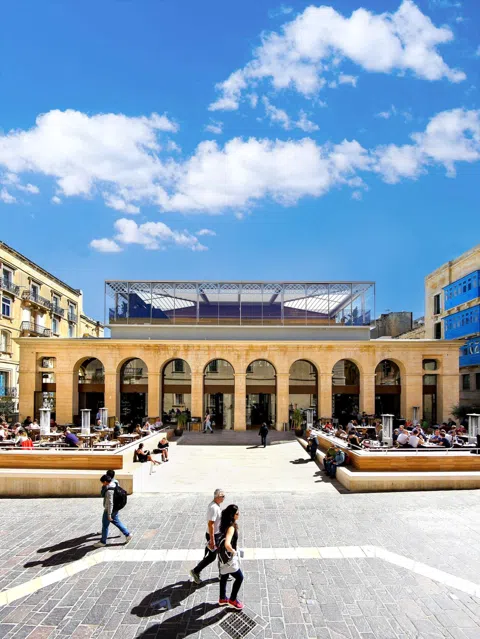
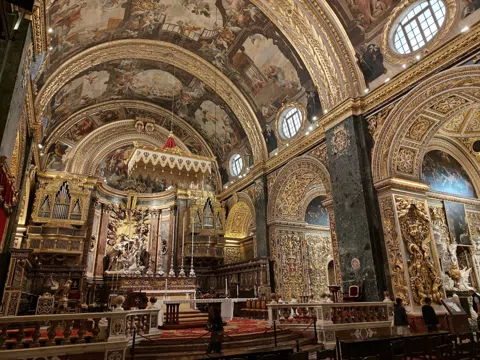
The Valletta issue
Valletta to the Sand Without a Rental Car
Bus routes, ferry fares and landing passes for a dozen swimming spots you can reach from the capital without a car.

By Robin de VriesSlow days across Valletta's streets
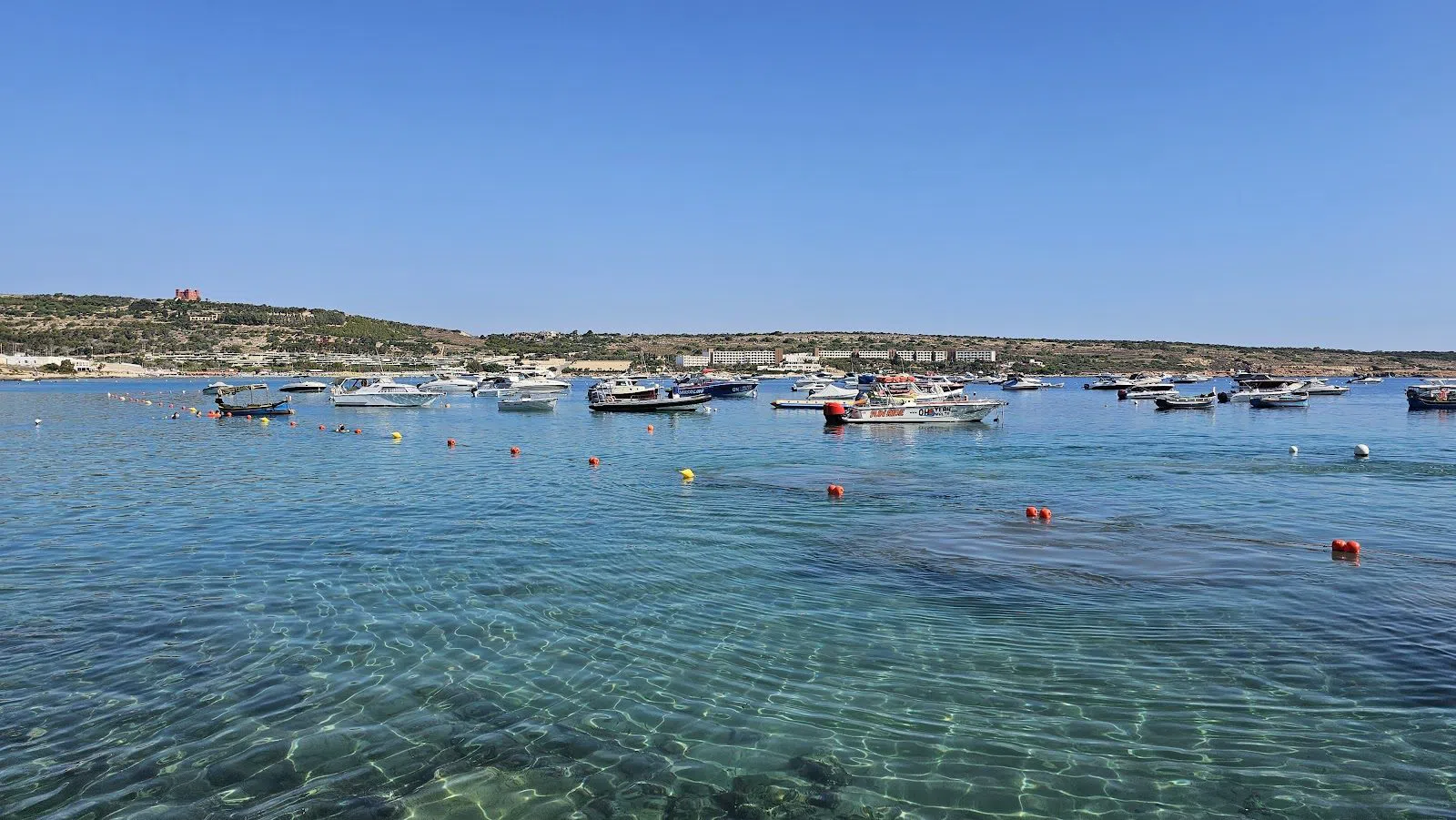
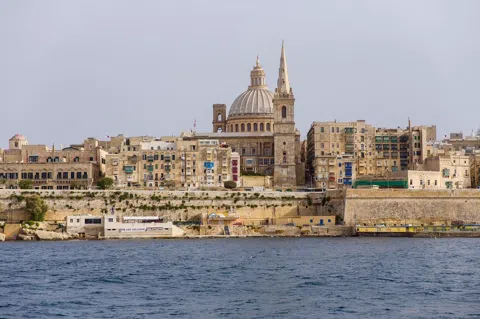
Valletta has no beach. The peninsula is limestone and bastion wall from end to end, the harbour water on both sides is deep and busy with traffic, and the nearest sand is a bus ride north. That matters less than it sounds. The terminus sits directly outside City Gate, the ferry quays are a few minutes below the walls, and if you leave by nine you can be on open sand in the northwest, or on a rock shelf across the water, with the whole day still ahead of you.
The shape of the day
Two things settle most of the planning. Every bus mentioned here leaves from the terminus immediately outside City Gate, so the walk to your transport is about five minutes from anywhere inside the walls. And for anything close by, the ferry beats the road.
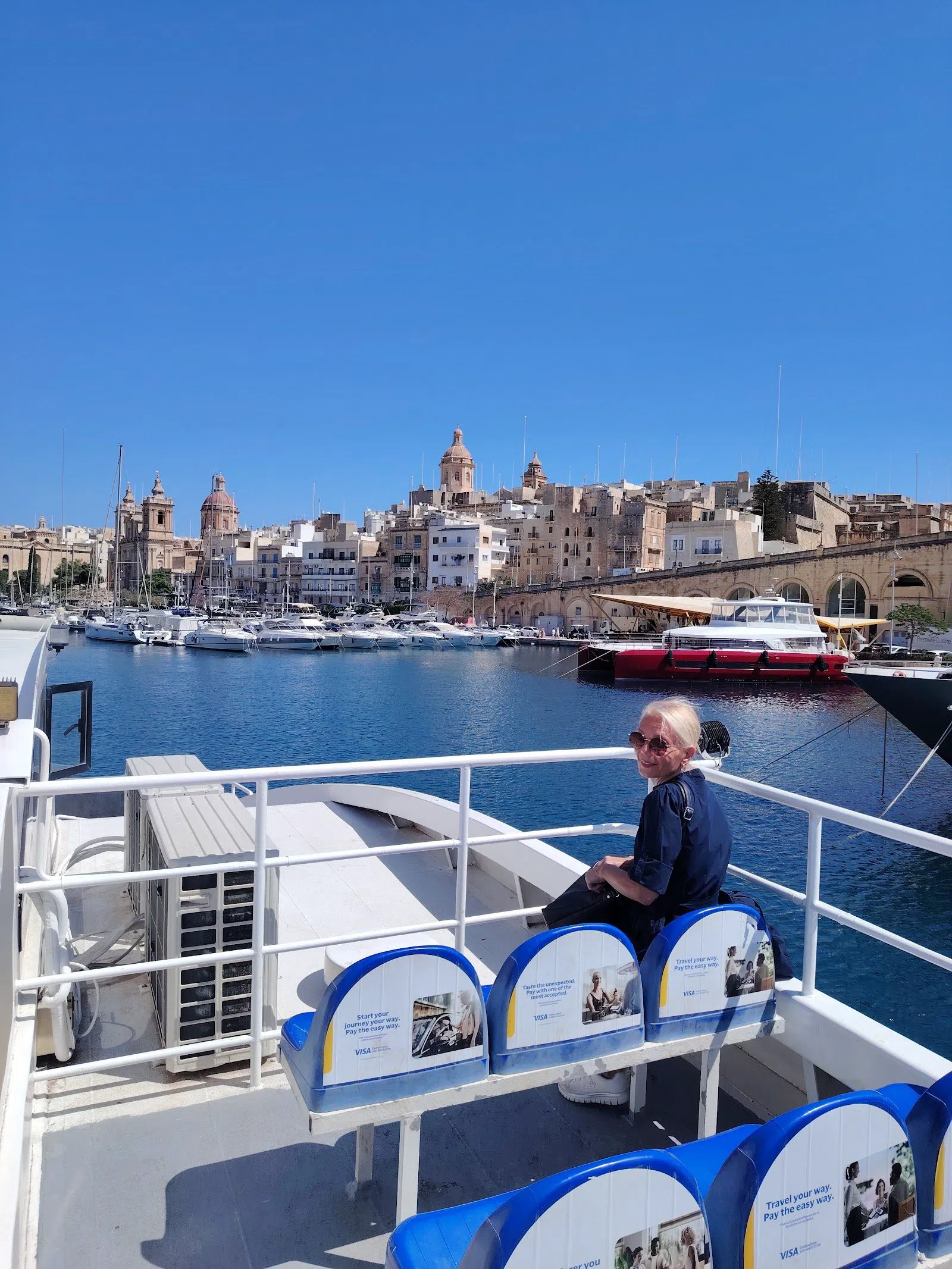
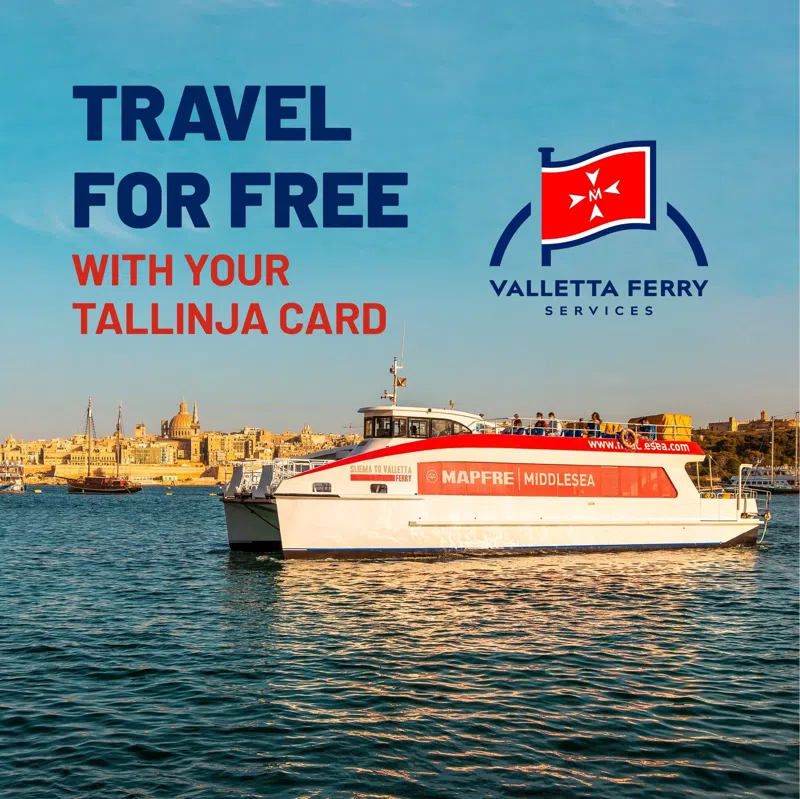
Valletta Ferry Services (quays below the bastions, on both the Marsamxett and Grand Harbour sides) runs two walk-on routes roughly every 30 minutes. A single is about €1.50, a return €2.80, children around €0.50, and a weekly pass about €10, which pays for itself in four crossings. Nothing is reserved and nobody takes names, so a group of nine simply boards together, which you cannot count on doing on a bus heading north at nine in the morning in August. The crossing itself takes under ten minutes.
Buses are flat-fare singles paid to the driver, so carry coins. Reckon on about an hour from the terminus to the northwest bays, and rather more when the coast road is full. If you are still choosing a base, run the Valletta hotel search with the distance filter set to City Gate rather than to any beach. Closeness to the terminus is what shortens every day described below.
Plan your Valletta trip
Live prices from our booking partners.
Free cancellation on many rooms. We may earn a commission when you book.
Swims you can do in a spare afternoon
If you have three hours rather than a full day, don't go north. Go across.
Fond Għadir (Sliema seafront, a short walk from the ferry landing) is a Blue Flag rock platform rather than a beach: flat shelves, ladders into clear water, a buoyed swimming zone and lifeguards in season. Total effort from the capital is one ferry and about ten minutes on foot. Entry is free, sunbed hire and cafés sit along the promenade behind you, and because the shelf runs for several hundred metres a group spreads along it without booking anything. There is no gate and no door policy. There is also no sand, so if you are travelling with small children who want to dig, this is the wrong choice and Mellieħa is the right one.
Rinella Bay (Kalkara, on the Three Cities side of the Grand Harbour) is the other short hop, reached on the second ferry route rather than by bus. It is a modest local bay that residents use, and the closest thing to a beach within genuine walking-and-boat distance of the city. Keep expectations level: no concessions, no hire, room for a handful of people rather than a party, and a working harbour on the horizon. As an early-evening swim before dinner it is hard to fault. As the centrepiece of a beach day it is thin.
Straight up route 44 to the northwest bays
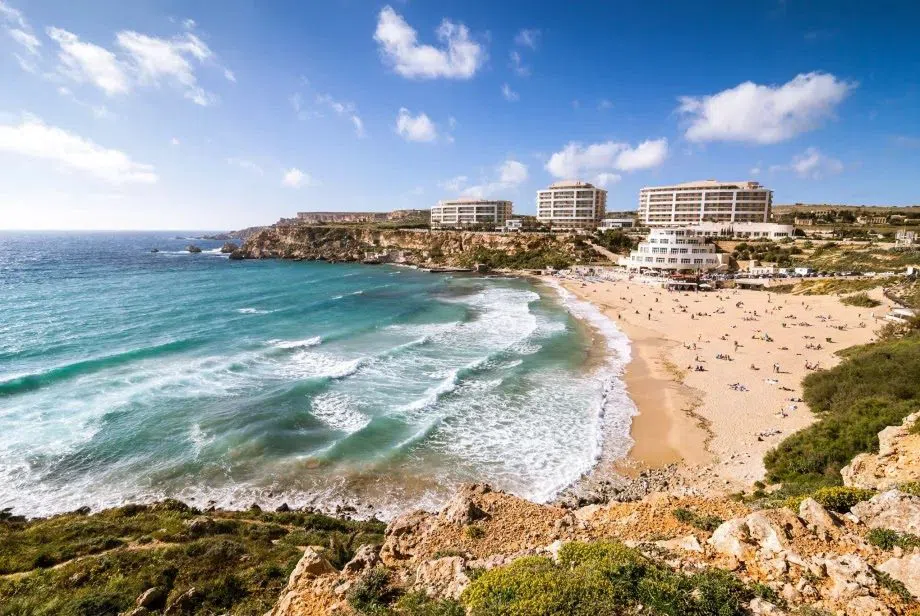
Golden Bay (Ir-Ramla tal-Mixquqa, northwest coast) is the one to take if you want sand, facilities and no connections. Route 44 runs from Valletta to Għajn Tuffieħa about every half hour and puts you at the top of the bay, with no change and no walk to speak of. It is a wide public beach with lifeguards in season, sunbeds at roughly €10 to €15 a pair, and watersports desks that handle groups on the spot without a reservation. Entry is free. It faces open water to the west, so the sun goes down into the sea in front of you rather than behind a headland. Worth staying for, and worth checking the last 44 before you decide to.
Għajn Tuffieħa (Riviera Bay, the next bay along) uses the same bus and the same stop. The difference is a long flight of steps down the cliff, which filters out much of the crowd, and which also rules the bay out for anyone who would struggle with them or is carrying a cool box for eight. There is no concession infrastructure, sunbed hire is limited and seasonal, and there is nothing to buy at the bottom. For two people with water and a towel it is the better bay. For a large group it is a logistical mistake: take the same bus and stay next door.
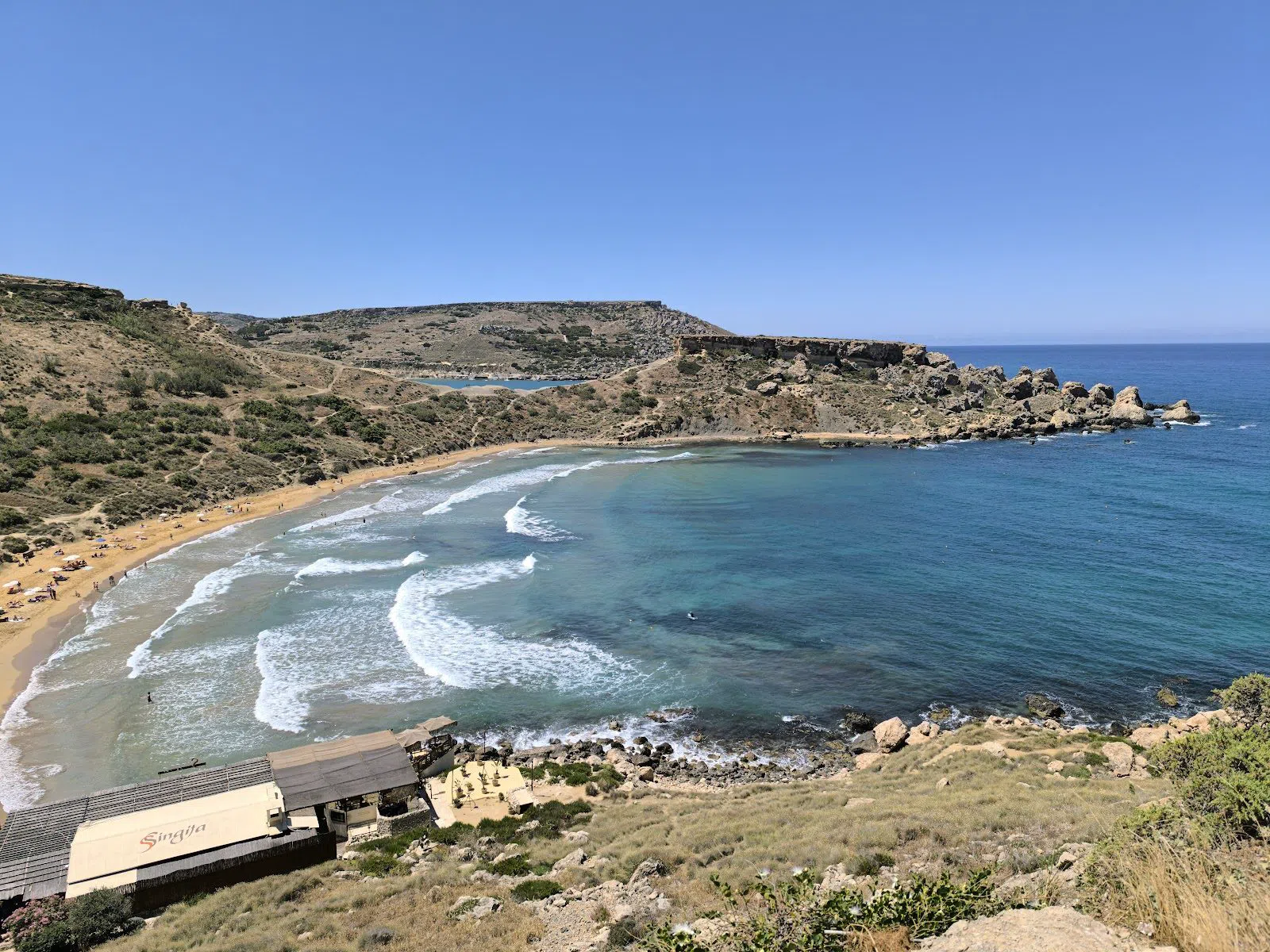
Ġnejna Bay (below Mġarr, on the same western coast) is car-free only in summer, and you should treat that as a hard condition rather than a detail. The route is the 44 as far as Mġarr, then the seasonal 101, which in 2026 is extended down to the bay from 30 May and drops you about two minutes from the sand. Confirm on the day that it is running before you commit to the connection; if it isn't, you are looking at a long walk down and a longer, steeper one back up. The bay itself is open, free and easily able to absorb a group, with almost nothing in the way of facilities. Bring water, food and your own shade.
North on route 49
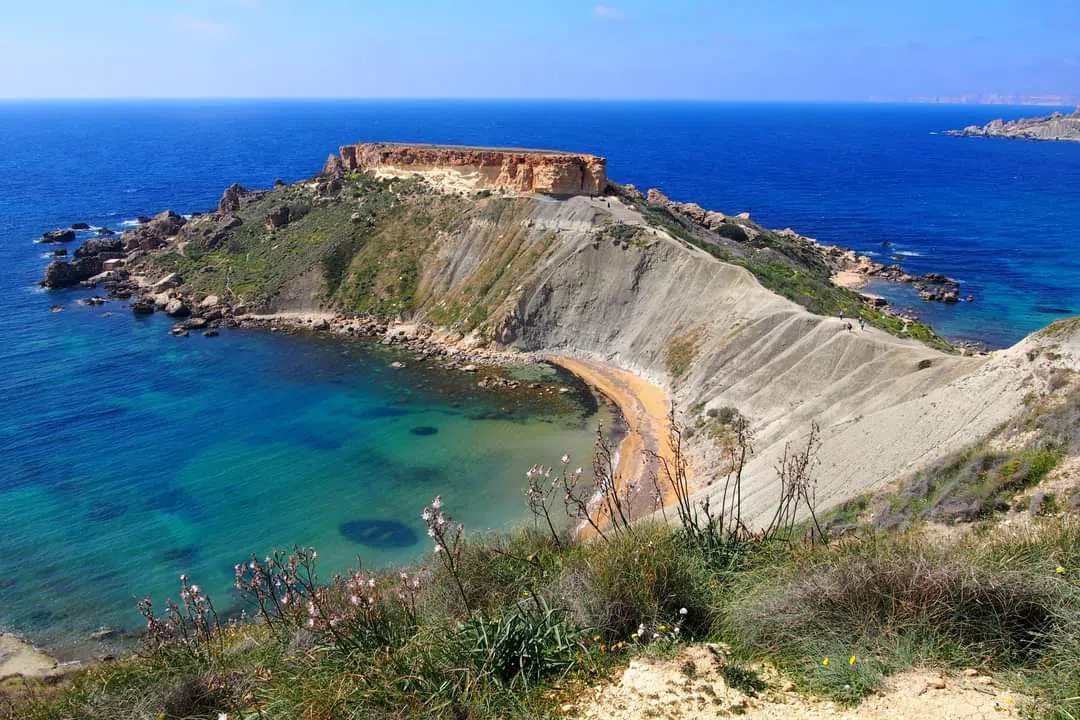
Mellieħa Bay (Għadira Bay, northern Malta) is the least complicated beach day from the city and the one to pick when the group is mixed. Route 49 runs from the Valletta terminus to Għadira roughly hourly from 05:50, so the timetable rewards an early start and punishes a lie-in. The beach is wide, sandy and entirely public, with room for large parties; sunbed and parasol concessions and watersports operators take group bookings on the spot, at roughly €10 to €20 for two loungers and a parasol. The water is what earns it a place here: still around waist depth fifty metres out, which suits weak swimmers, nervous adults and children who want to be able to stand up.
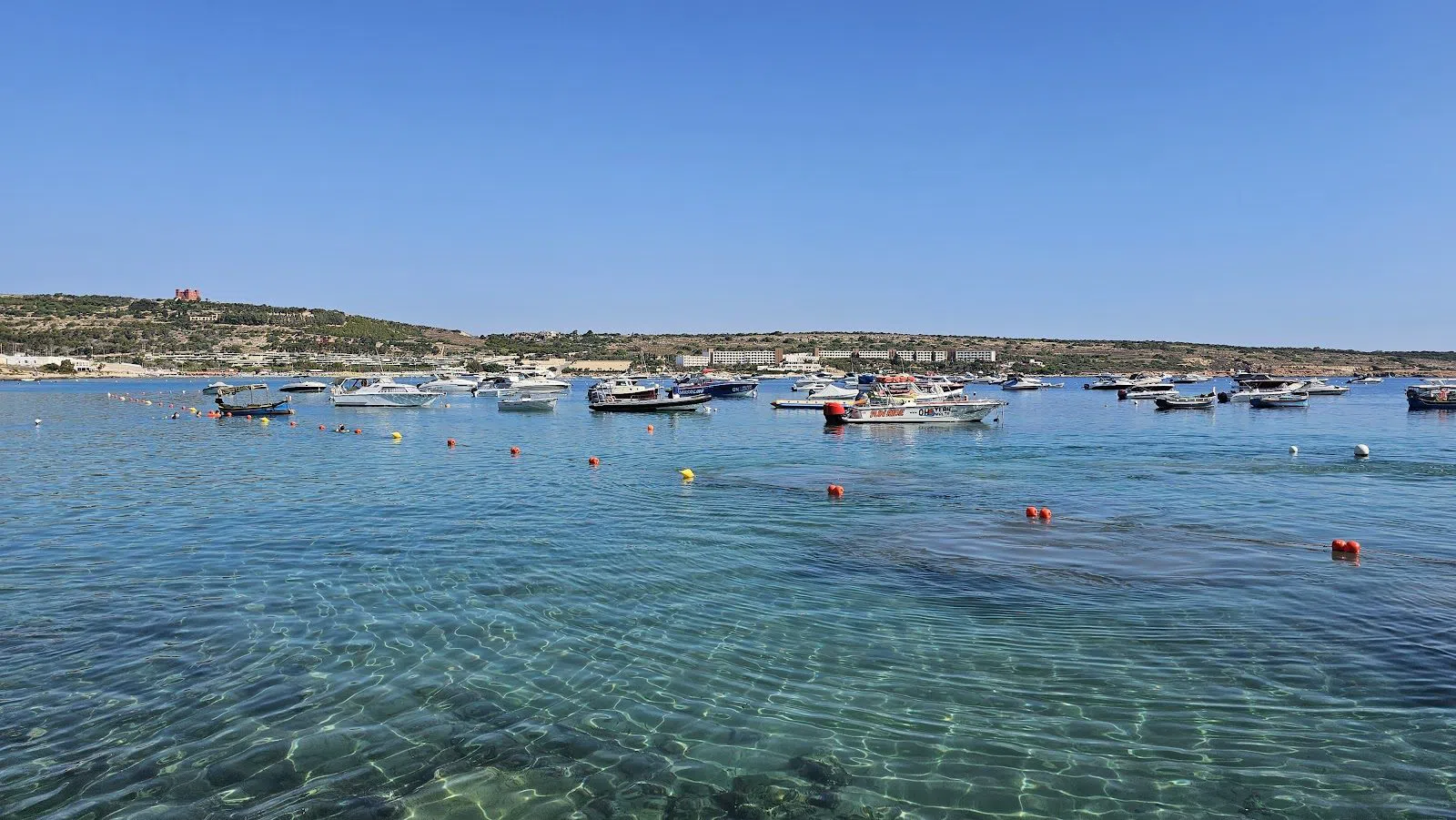
Little Armier Bay (Armier, at the northern tip) used to mean a car. Through the 2026 season route 49 is extended past Għadira to Armier daily, which turns a normally car-only corner of the island into an ordinary bus day. The beach is free. Tortuga Beach Club sits on it, takes group sunbed bookings by telephone and includes free umbrellas with them. Phone rather than web, because online booking closes out of season. One rule to know before you build a Sunday around it: on Saturdays, Sundays and public holidays the club's sunbeds are reserved for restaurant customers, so on those days a lounger costs you a meal. Midweek is both cheaper and quieter.
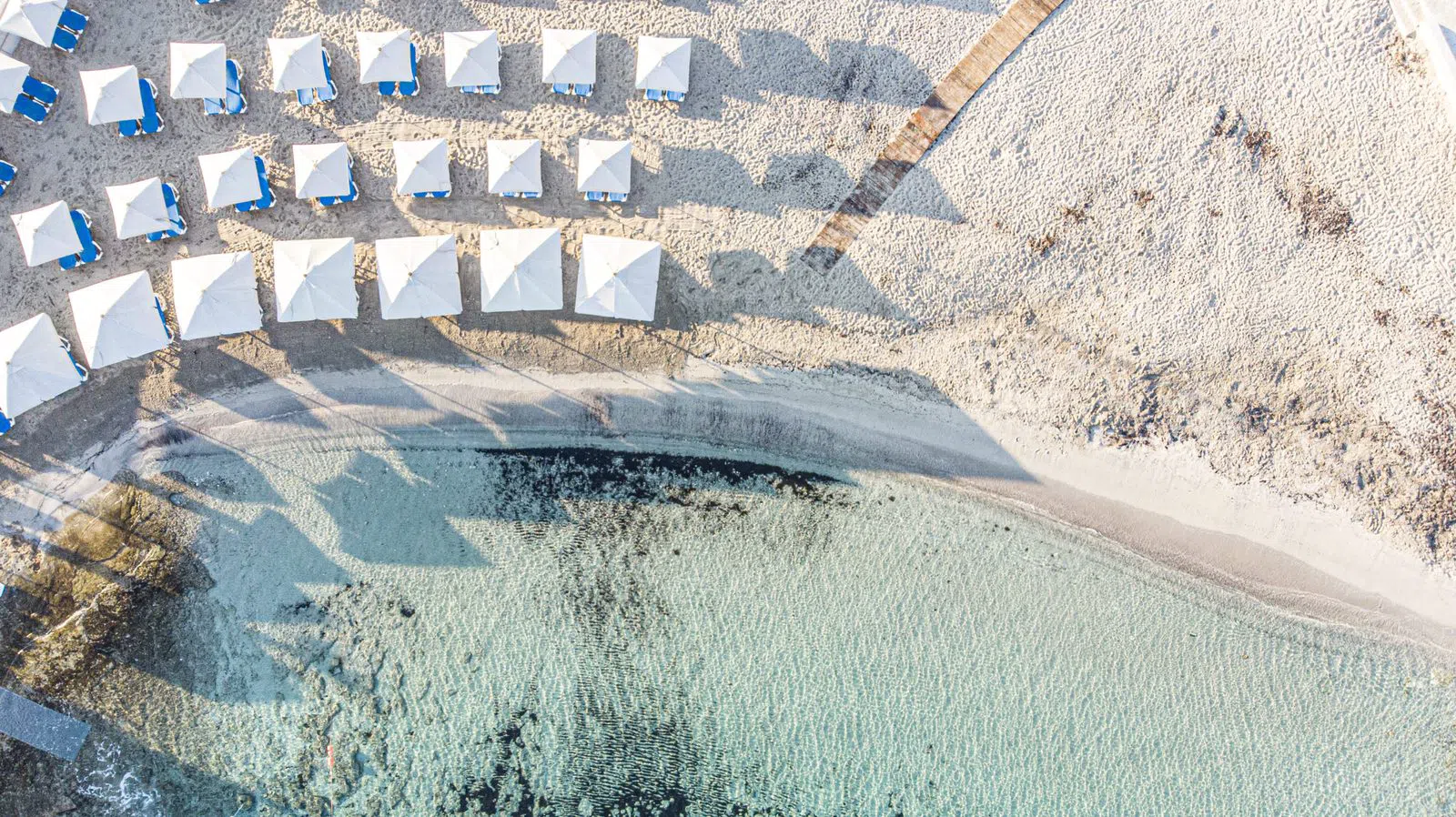
The far tip and the crossing to the lagoon
Paradise Bay (Ċirkewwa, the northwestern tip) is reached on routes 41 or 42, or the faster X300; the old X1 was withdrawn in April 2025, so ignore any timetable still listing it. The cove is compact and sheltered, with free public beach access and a lido behind it: bar, restaurant, showers and toilets, which matter at the end of a long ride. Groups are welcome, though deck space runs out by late morning in August. Access is a flight of steps down to the water with no way around them, so this is not a bay for anyone with mobility trouble.
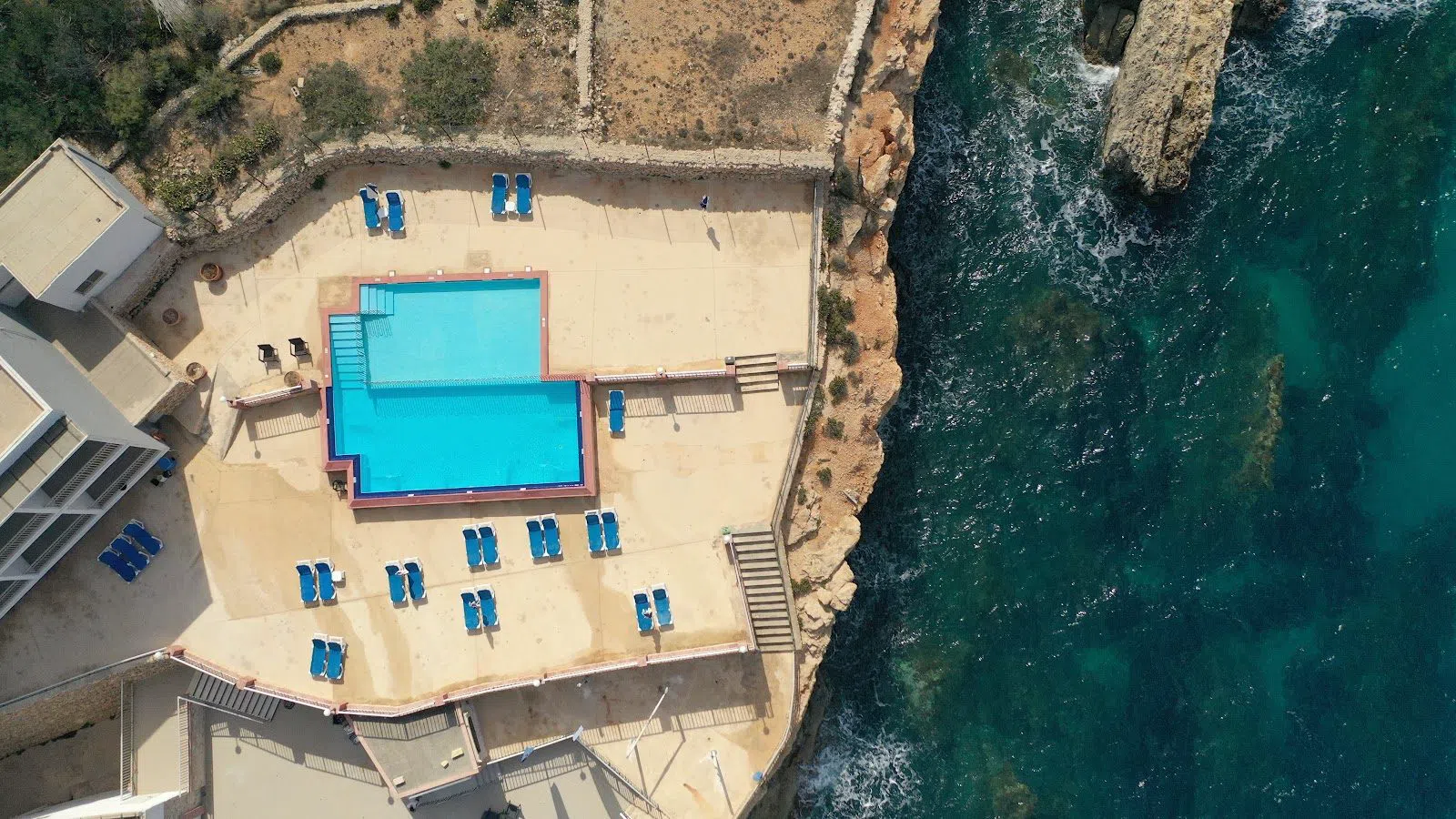
The Blue Lagoon (Comino, in the channel between the islands) needs planning rather than luck. Since 2025, everyone stepping ashore needs a free timed landing pass from the official system at blcomino.com. There are three slots (08:00 to 13:00, 13:30 to 17:30, and 18:00 to 22:00), a cap of 4,000 people on the island, and a fine for landing without one. Each pass covers up to four people, so a group of ten needs three reservations, and summer slots go weeks ahead. Book this before you book anything else about the day.

Getting there from Ċirkewwa is simple. Comino Ferries Co-Op (Ċirkewwa and Marfa jetties) has run the crossing since 1990, roughly every 30 minutes in peak season, at about €15 return for a 25-minute passage, and their boarding pass includes island entry, so on that operator there is no separate reservation to hold. They also run charters sized for large groups, worth a phone call if you are more than a dozen. The afternoon slot is the calmer one; the early boats carry the bulk of the day-trip volume.
Santa Marija Bay (Comino, north side) is the reason to stay ashore past lunch. It is about a 20-minute walk over the plateau from the lagoon jetty and feels like a different island: small, quiet and unmanaged, with the walking trails and the rest of Comino sitting outside the controlled landing zone. Fine for a handful of people. Wrong for a party of fifteen, who would fill it on arrival.
If the ride to the far north sounds like more day than you want, Captain Morgan Cruises (departing the Sliema side, one €1.50 ferry hop from the city) runs full-day Comino cruises at roughly €50 an adult on a licensed fleet built for volume, with group and charter bookings as routine business. You trade money and a fixed return time for skipping the bus entirely.
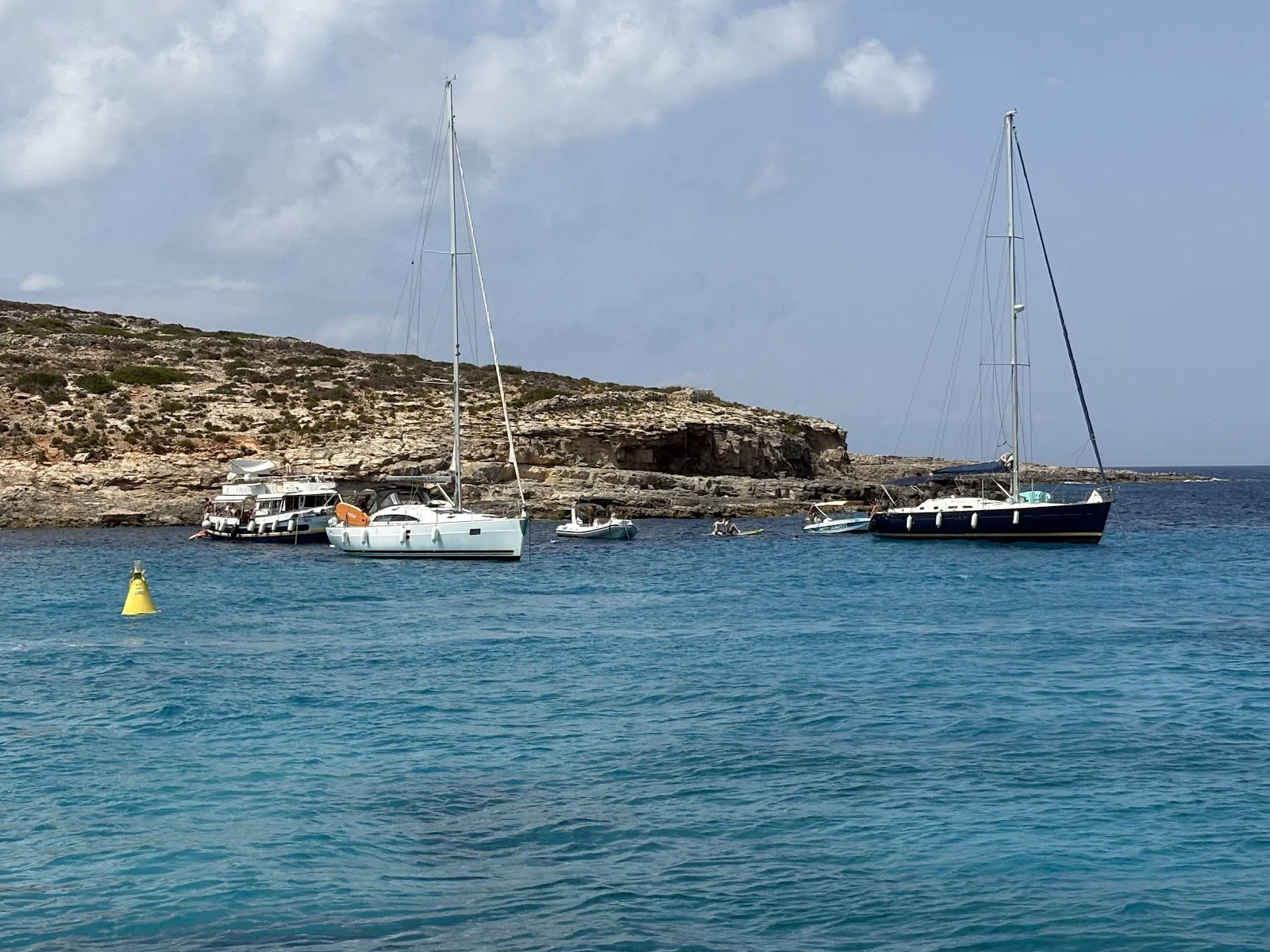
Rock, ledge and a cove with nothing on it
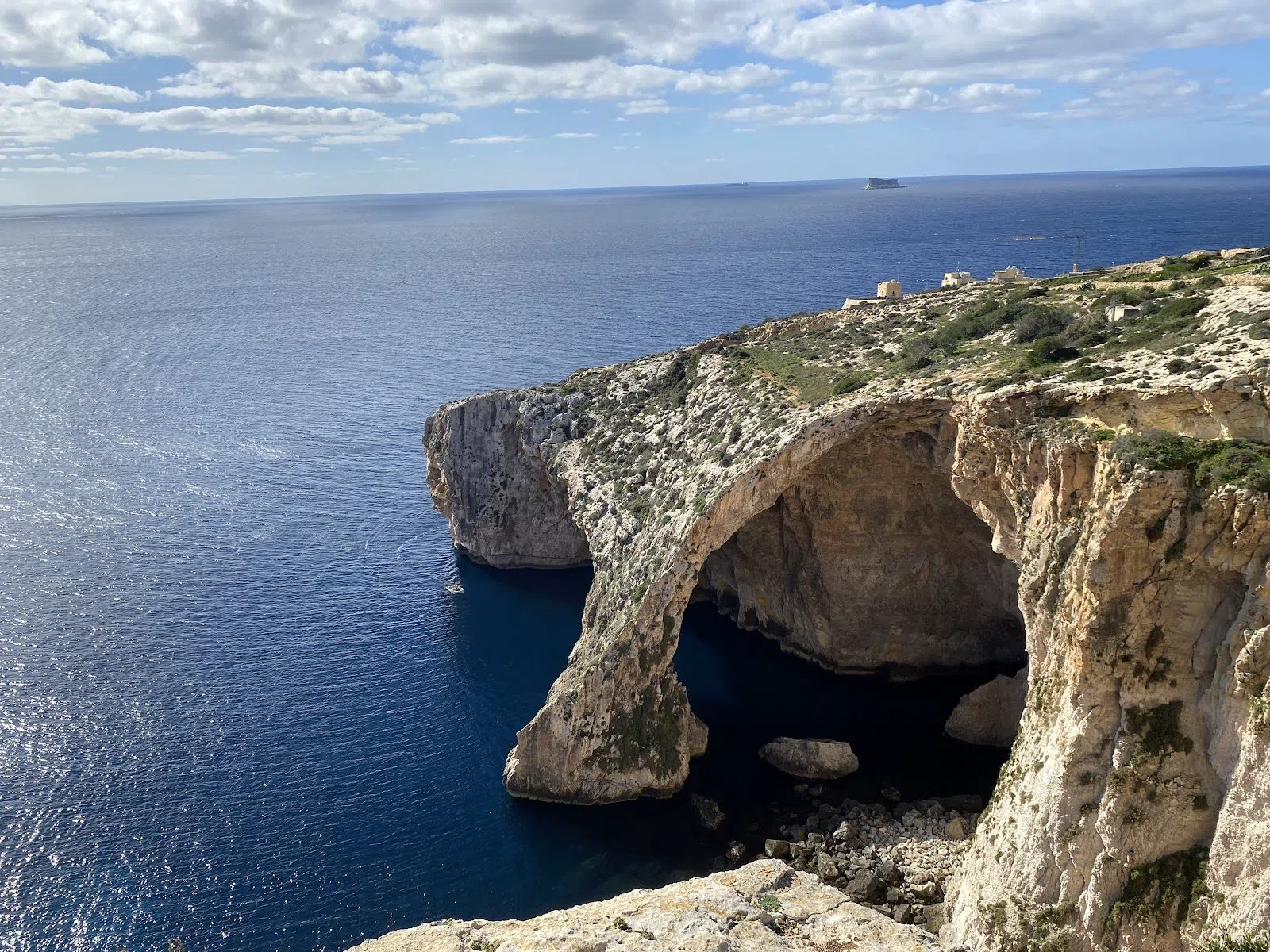
Wied iż-Żurrieq (south coast) is a swimming inlet rather than a beach: small ledges, a slipway, and deep clear water better suited to snorkelling than anything on the sandy northwest. Route 74 comes direct from the city as far as the Panorama stop, and the 201 runs into the village itself. Two cautions, both real. The inlet doubles as a working boat channel for Blue Grotto trips, which are priced separately and leave constantly, so swim to the side rather than across it, and the caves themselves are closed to swimmers. Space is tight. A few swimmers are comfortable there; a group of twelve is not.
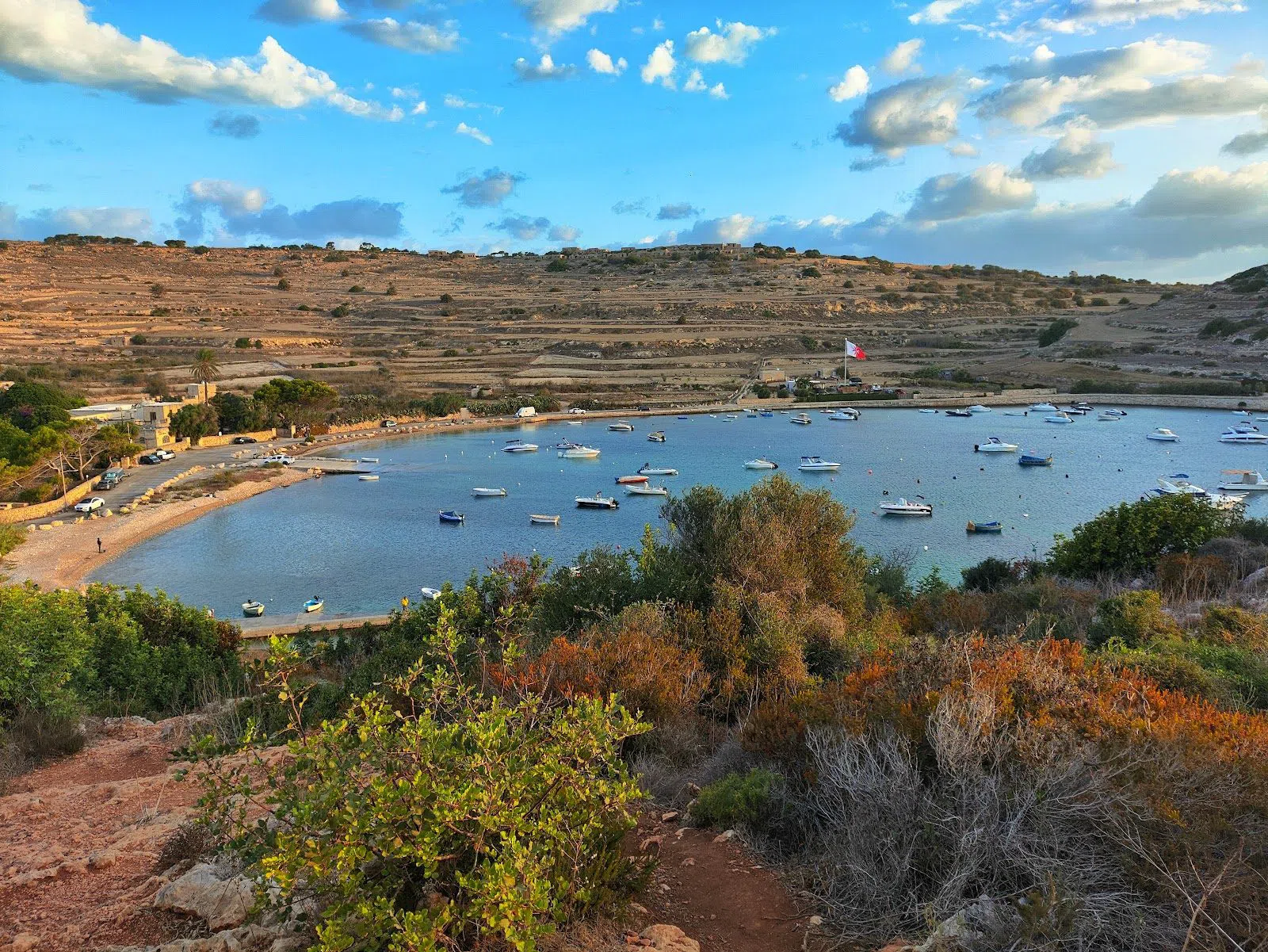
Mistra Bay (below Xemxija, northern Malta) is the quietest option here that a bus can still serve. Expect roughly a 20-minute walk downhill from the Xemxija stop, and the same climb back at the end of the afternoon in full sun. It is pebble rather than sand, there are no facilities of any kind, and you should carry your own water because there is nothing at the bottom to buy. Couples and pairs will have a good day of it. Groups will run out of room and shade.
Matching the bay to the people you are with
Children and weak swimmers point to Mellieħa Bay, for the shallow water and the concessions, and the hourly 49 is the only real constraint. A large group that wants to eat, drink and hire loungers is best served by Golden Bay midweek, or Little Armier if someone will make the phone call and it isn't a weekend. Two people who want quiet will do better at Għajn Tuffieħa or Mistra Bay, both of which punish anyone carrying too much. Swimmers and snorkellers should go to Fond Għadir for convenience or Wied iż-Żurrieq for water clarity. Anyone with mobility trouble should stay away from Paradise Bay, Għajn Tuffieħa and Mistra Bay, all of which involve steps or a descent, and use the ferry and the Sliema promenade instead. And a group that wants the lagoon needs to decide early between the passes-and-buses route and the cruise from Sliema, because one of them sells out weeks ahead.
Practical notes
Transport. Buses leave from the terminus outside City Gate; singles are flat-fare and paid to the driver. The ferry is about €1.50 single, €2.80 return, children around €0.50, roughly every 30 minutes, with a weekly pass at about €10 if you expect more than four crossings. Check the last departure before you settle on a bay. Northwest services thin out in the evening, and a missed 44 turns into an expensive taxi.
Cash. Carry €40 to €50 in small notes and coins between two of you. Bus fares, sunbed hire, kiosks and beach concessions are all easier in cash than in card, and the smaller bays have nothing at all.
Timing. Route 49's first bus is 05:50 and it runs roughly hourly, so leaving before eight materially changes the day. Return buses from the northwest fill up between 17:00 and 19:00 in high summer; either leave the beach early or plan to stay for the sunset and take a later one. Comino landing slots should be booked as far ahead as you can manage, and Ġnejna's 101 connection only exists from 30 May in 2026.
Budget. A day at Mellieħa or Golden Bay costs bus fares plus €10 to €20 for two sunbeds, under €30 for a couple, less if you bring a towel and sit on it. Comino runs to about €15 return on the boat plus the bus, with the landing pass free. The cruise from Sliema is roughly €50 a head. The cheapest swim on this list is Fond Għadir at €5.60 in ferry returns for two people, which is why it is the one to fall back on when a plan collapses. For everything else the city itself does well (the food, the walls, the harbour) see the Valletta guide.
Before you go
Can you swim in Valletta itself?
No. The city sits on a fortified peninsula with deep harbour water and boat traffic on both sides, and there is no beach inside the walls. The nearest swims are Fond Għadir on the Sliema seafront, about ten minutes on foot from the ferry landing, and Rinella Bay in Kalkara on the Three Cities ferry route.
Which beach is easiest to reach from Valletta without a car?
Mellieħa Bay (Għadira Bay). Route 49 runs direct from the Valletta terminus roughly hourly from 05:50, and the beach is wide, sandy, free to enter and shallow, around waist depth fifty metres out. Sunbed and parasol hire runs about €10 to €20 for two.
Do I need a pass to visit the Blue Lagoon on Comino?
Yes. Since 2025 everyone landing needs a free timed pass from blcomino.com, in one of three slots (08:00-13:00, 13:30-17:30, 18:00-22:00), with a 4,000-person cap and a fine for landing without one. Each pass covers up to four people. If you cross with Comino Ferries Co-Op, their boarding pass includes island entry, so there is no separate reservation to hold.
How much does the Valletta ferry cost and how often does it run?
About €1.50 single and €2.80 return, with children around €0.50 and a weekly pass at roughly €10. Two walk-on routes, one to Sliema and one to the Three Cities, run about every 30 minutes, and neither takes reservations, so a group can turn up and board.
Can I get to Ġnejna Bay by bus?
Only in summer. Take route 44 to Mġarr, then the seasonal 101, which in 2026 is extended down to the bay from 30 May and stops about two minutes from the sand. Confirm the 101 is running before you commit, because otherwise it is a long walk down and a steep climb back.