The Valletta issue
Two Days in Valletta on Foot, Ferry and Bus
A weekend on a peninsula you can cross in 15 minutes, with a 58-metre lift and a 10-minute boat, plus the timings, prices and closed days that decide whether the plan holds.

By Robin de VriesSlow days across Valletta's streets
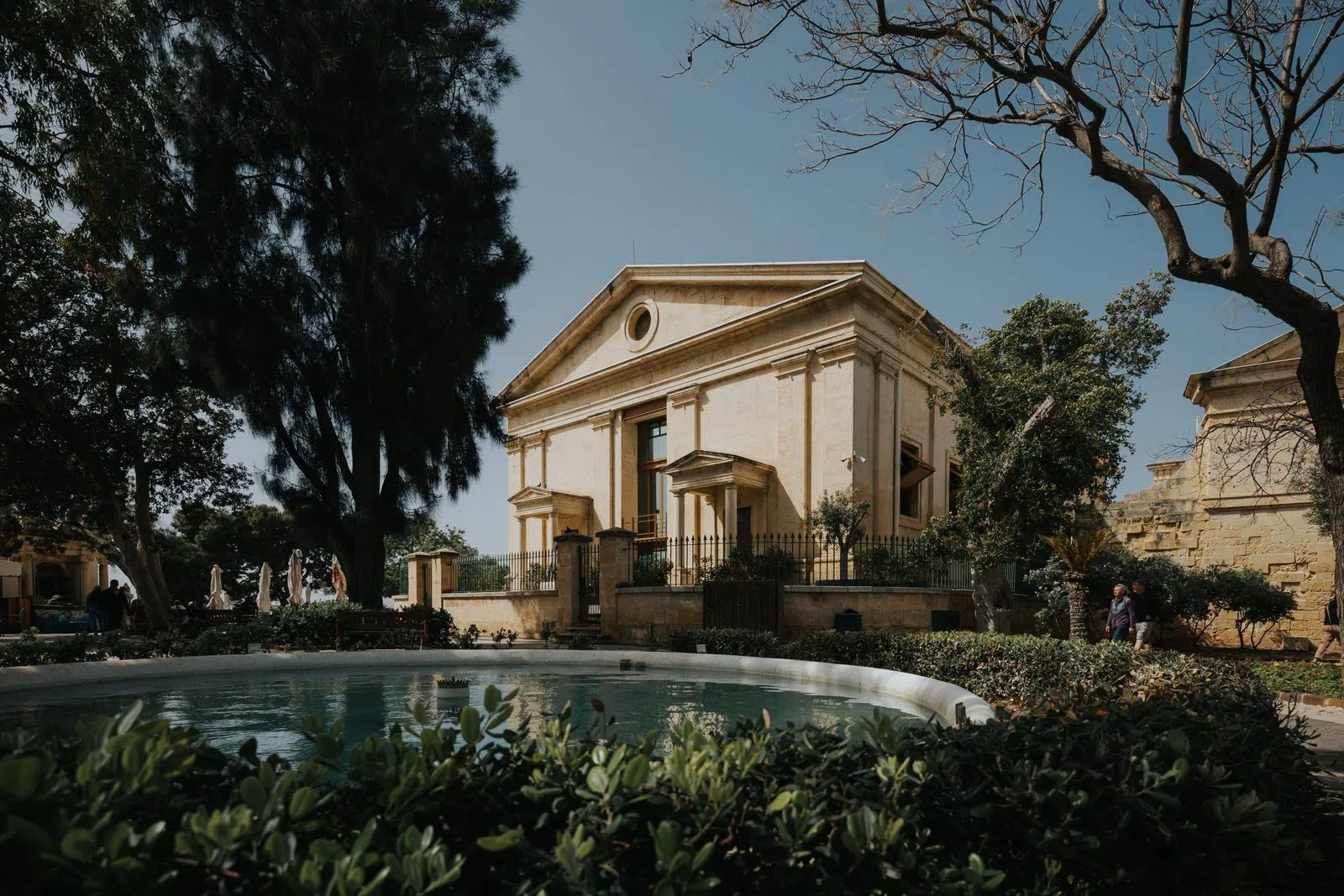
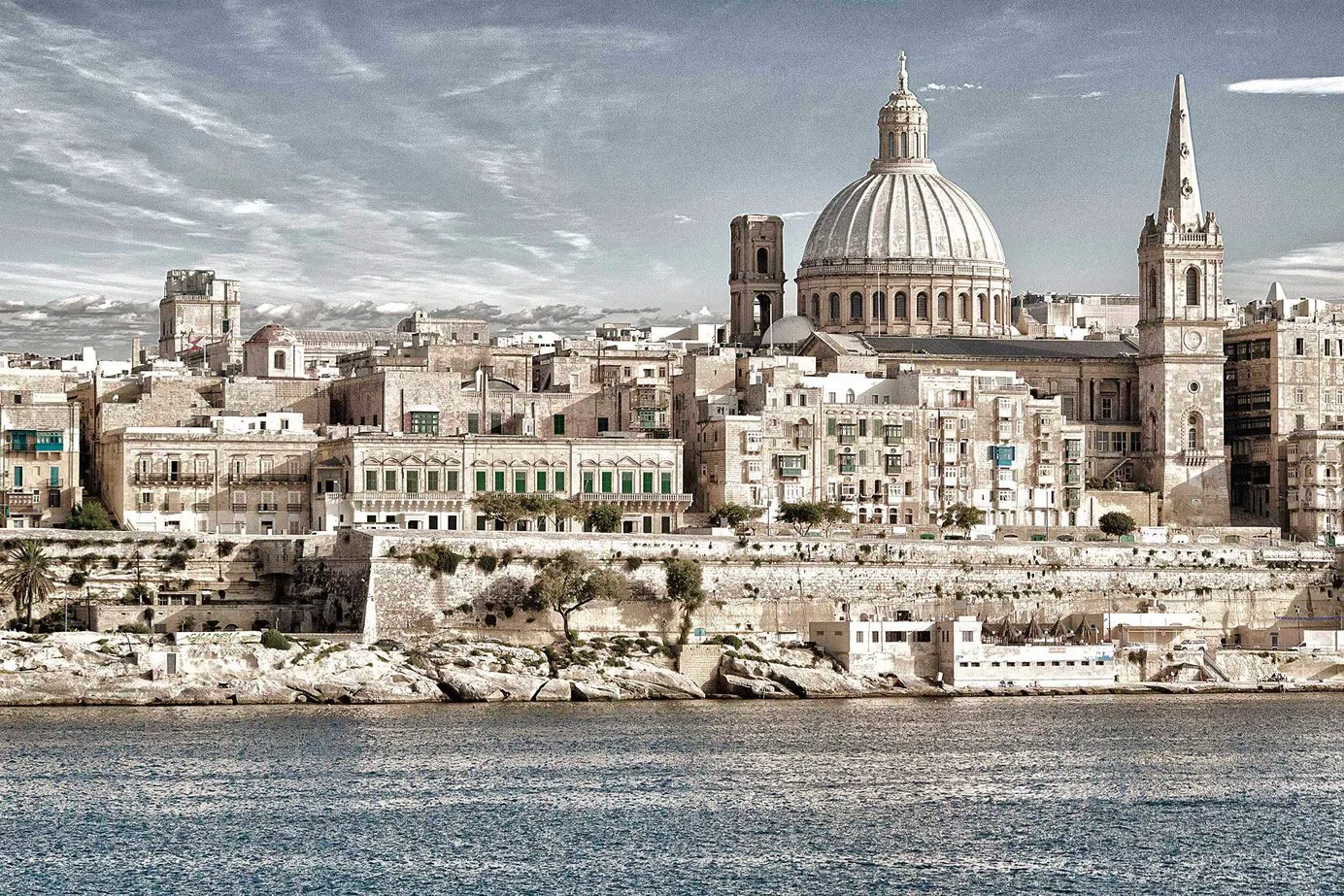
Valletta is about a kilometre long and six hundred metres wide, laid out on a grid that runs level along its spine and falls away in steps on either side. Walk it once and the case against a hire car makes itself: half the peninsula is pedestrianised, most of the parking that remains belongs to residents, and the two pieces of infrastructure a weekend needs, a bus terminus and a ferry pier, sit within ten minutes of nearly every hotel door. What follows is two days built on foot, on water and on one bus route.
The shape of the city and the two ways out
Republic Street runs the full length of the peninsula from City Gate to the open ground in front of Fort St Elmo. On the flat, unhurried, that is fifteen minutes. Merchants Street runs parallel one block down and carries the market stalls. Plan around the cross streets: several of them, including St Ursula Street and the lower stretch of Old Bakery Street, are stepped rather than paved, so a suitcase with small wheels is a genuine mistake here. Book accommodation on or near Republic, Merchants or Old Theatre Street and you will barely notice the gradient; check the Valletta hotel search for the streets rather than the star rating.

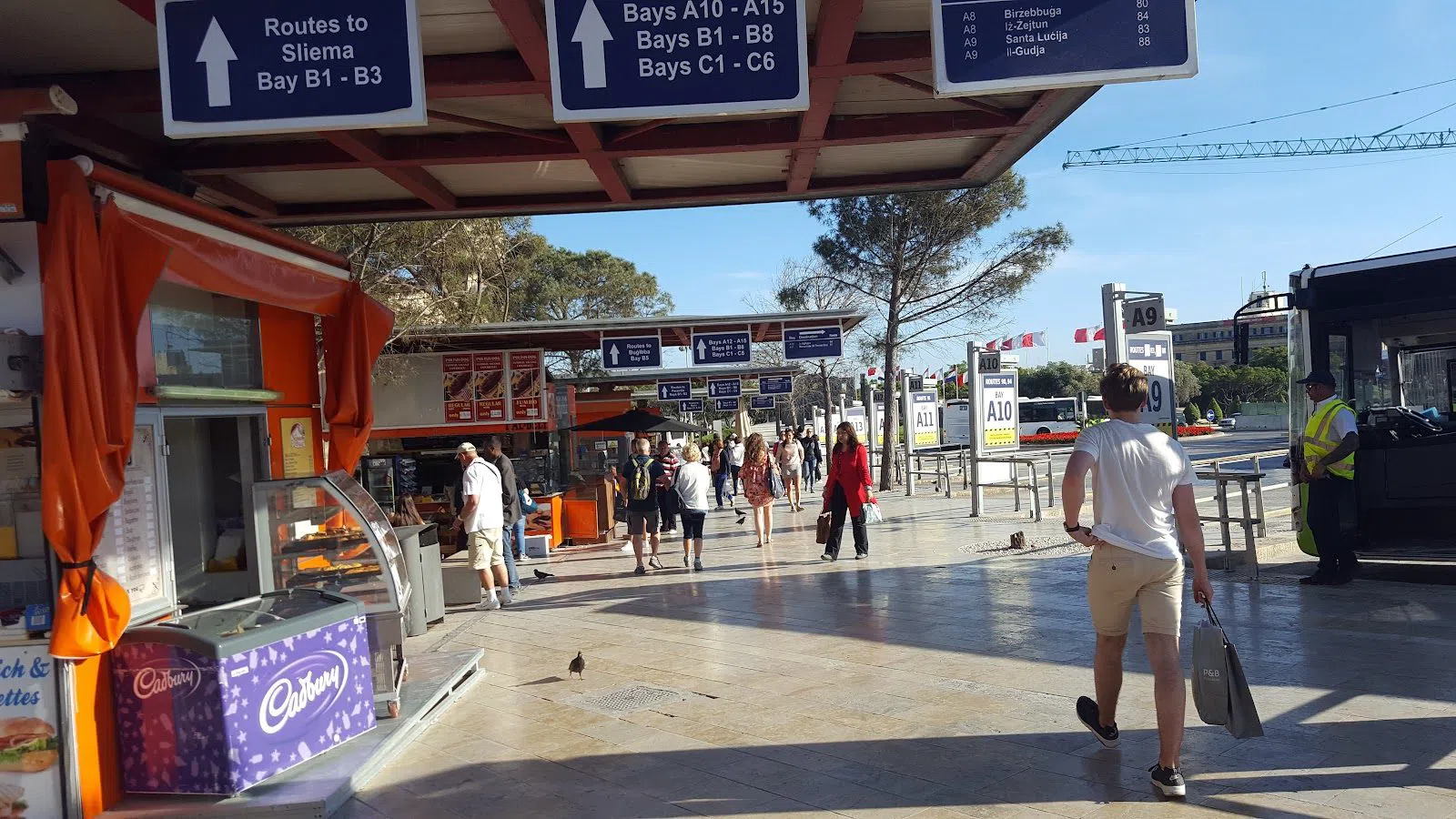
Everything on the main island leaves from one place. Malta Public Transport (tallinja) runs every route from the terminus in the open square immediately outside City Gate, five minutes from most Valletta hotels. A single is €2.00 in winter and €2.50 in summer and stays valid for two hours including transfers, which covers most out-and-back trips on one fare. A seven-day Explore card is €25 and breaks even after roughly ten rides, worth it if you are doing two day trips and an airport run, not worth it for a strict Friday-to-Sunday stay. Buses fill at peak and drivers will pass a stop that is already full, so if there are more than six of you, split across two departures rather than standing in a group and watching the bus go by.
Plan your Valletta trip
Live prices from our booking partners.
Free cancellation on many rooms. We may earn a commission when you book.
Start above the harbour
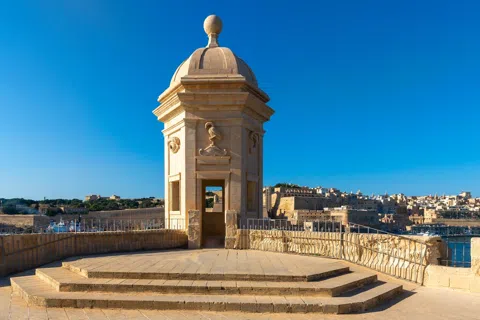
Go first to Upper Barrakka Gardens (upper Valletta, at the top of the Lascaris cliff). It is a free public garden with no ticket and no gate control, so any size of group simply walks in, and the arcade at the end frames the Grand Harbour and the creeks opposite. The terrace below it, the Saluting Battery, is ticketed at around €3 and fires its guns at noon and 4pm. It fills roughly ten minutes before each firing, so if you want the terrace rather than the view from above, send someone down early to hold space; the gardens give you the same scene for nothing, just from higher up.
The reason to begin here is the lift. The glass Barrakka Lift drops 58 metres from the garden wall to Lascaris Wharf in about 25 seconds, roughly €1 going up and free coming down. That single ride is what makes a car-free weekend function: it puts the harbour boats at the bottom of the cliff instead of a fifteen-minute walk around the bastions with a climb at the end. Plan your days so that you descend by lift and return by boat, not the reverse.
Getting off the peninsula without a timetable
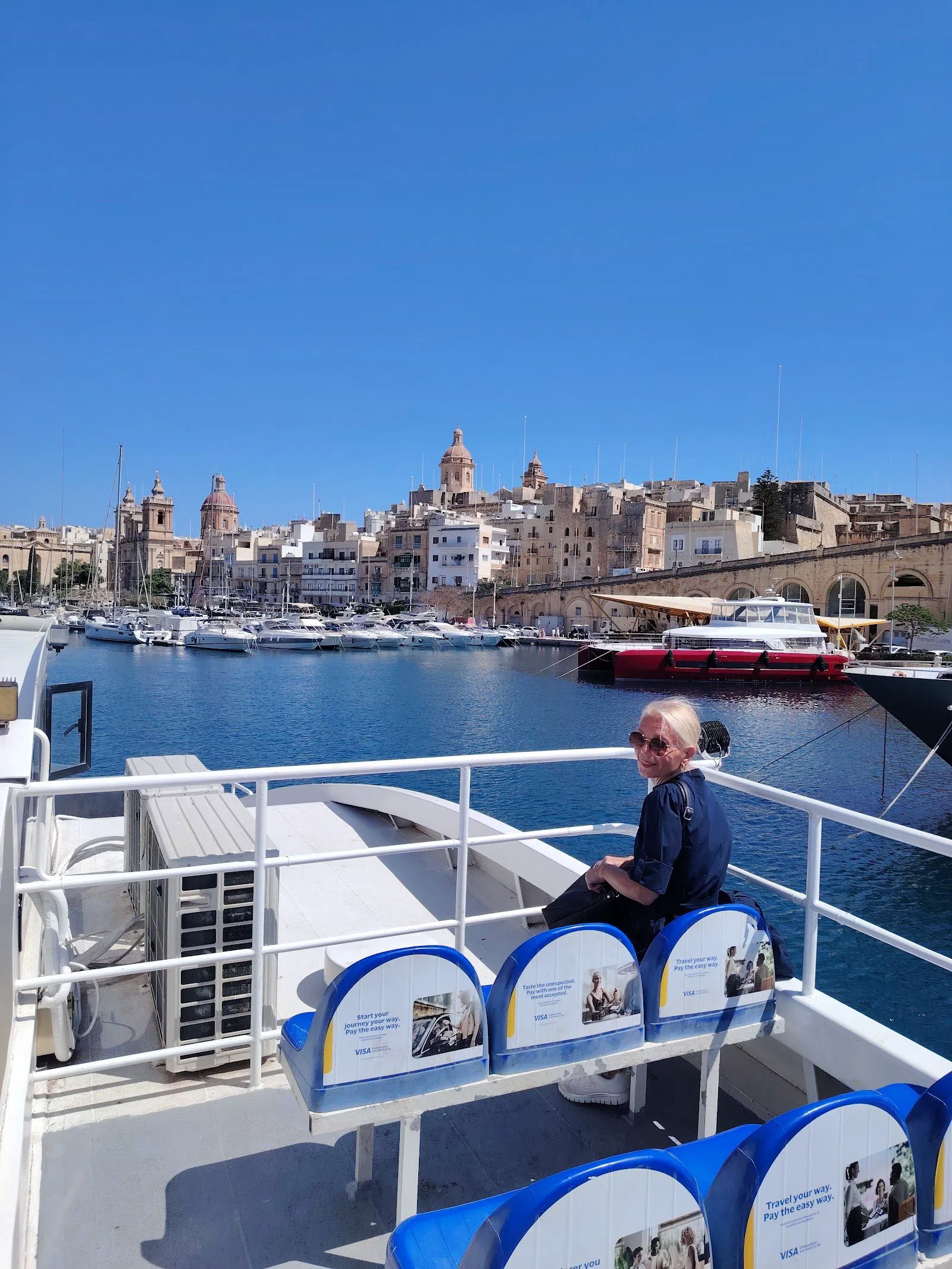
At the bottom you have two ways across the water. Valletta Ferry Services (Lascaris Wharf on the Grand Harbour side, and the Marsamxett pier on the other) is the dependable one: one operator, two crossings, walk-on with no booking, tickets from the kiosk. It is €2.50 single and €4.50 return, €2.80 for the night fare, around €1 for children, and free if you hold a personalised tallinja card. Boats run every 30 minutes on the Sliema run, with a reduced service on Sundays and through the winter. The crossing takes about ten minutes and replaces a bus ride of roughly forty around the head of the creek. Groups need no arrangement at all: everyone buys at the kiosk and walks on.
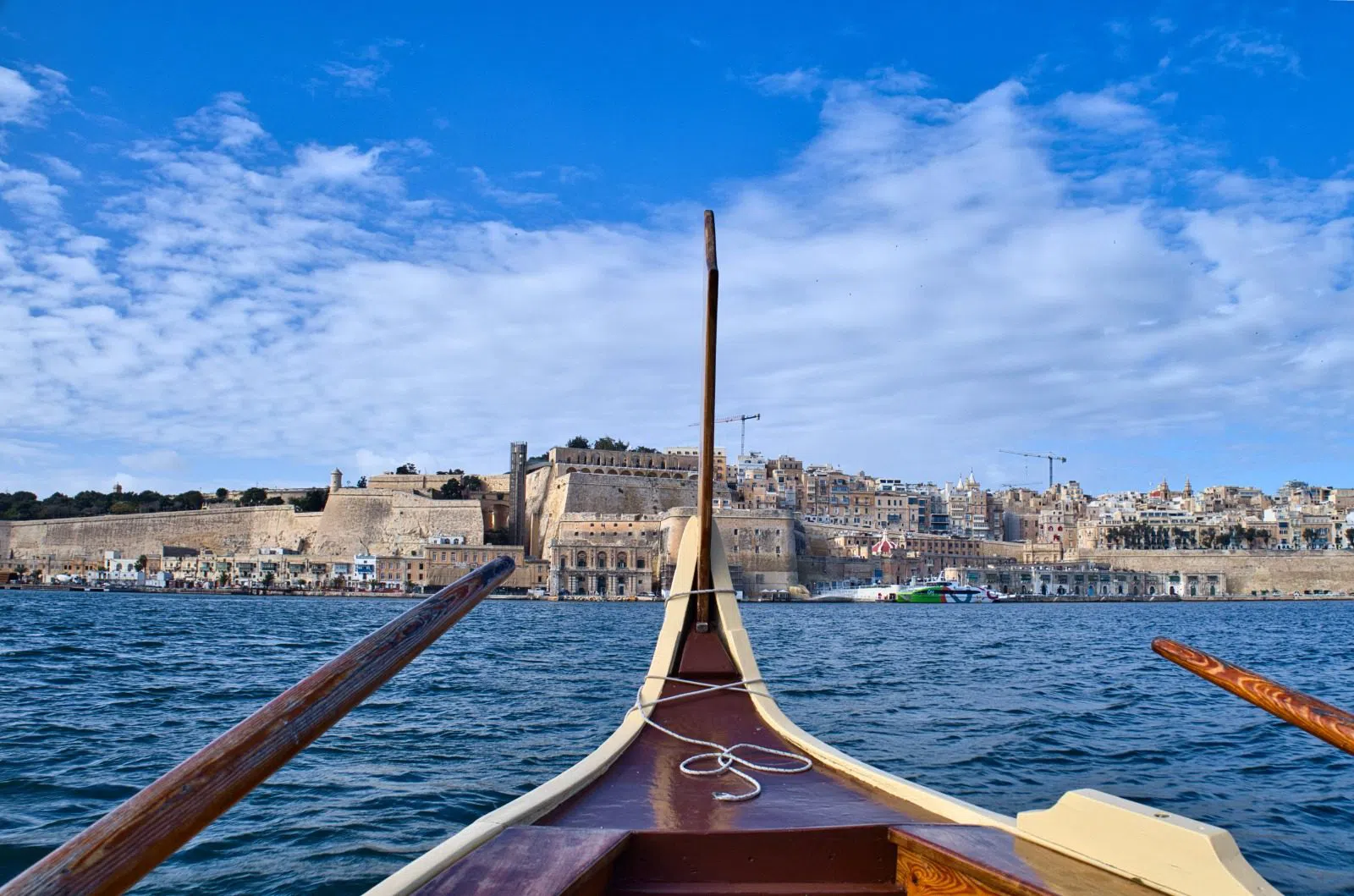
A & S Water Taxis (Lascaris Wharf, at the foot of the lift) is the other option and the more enjoyable one. These are traditional harbour boats run by self-employed boatmen, around €2 to €3 per person one way to Birgu, about €8 for a loop of the harbour, and roughly double in the evening. There is no timetable: they leave when about four passengers are aboard, which a group of four solves on the spot and a couple may wait ten or fifteen minutes for. The boats seat a handful each, so six or eight people split across two. The crossing takes five minutes at water level, close enough to the fortifications to read the stonework. Treat it as a daytime option, and keep the scheduled ferry as your way back after dark.
The morning that cannot be Sunday
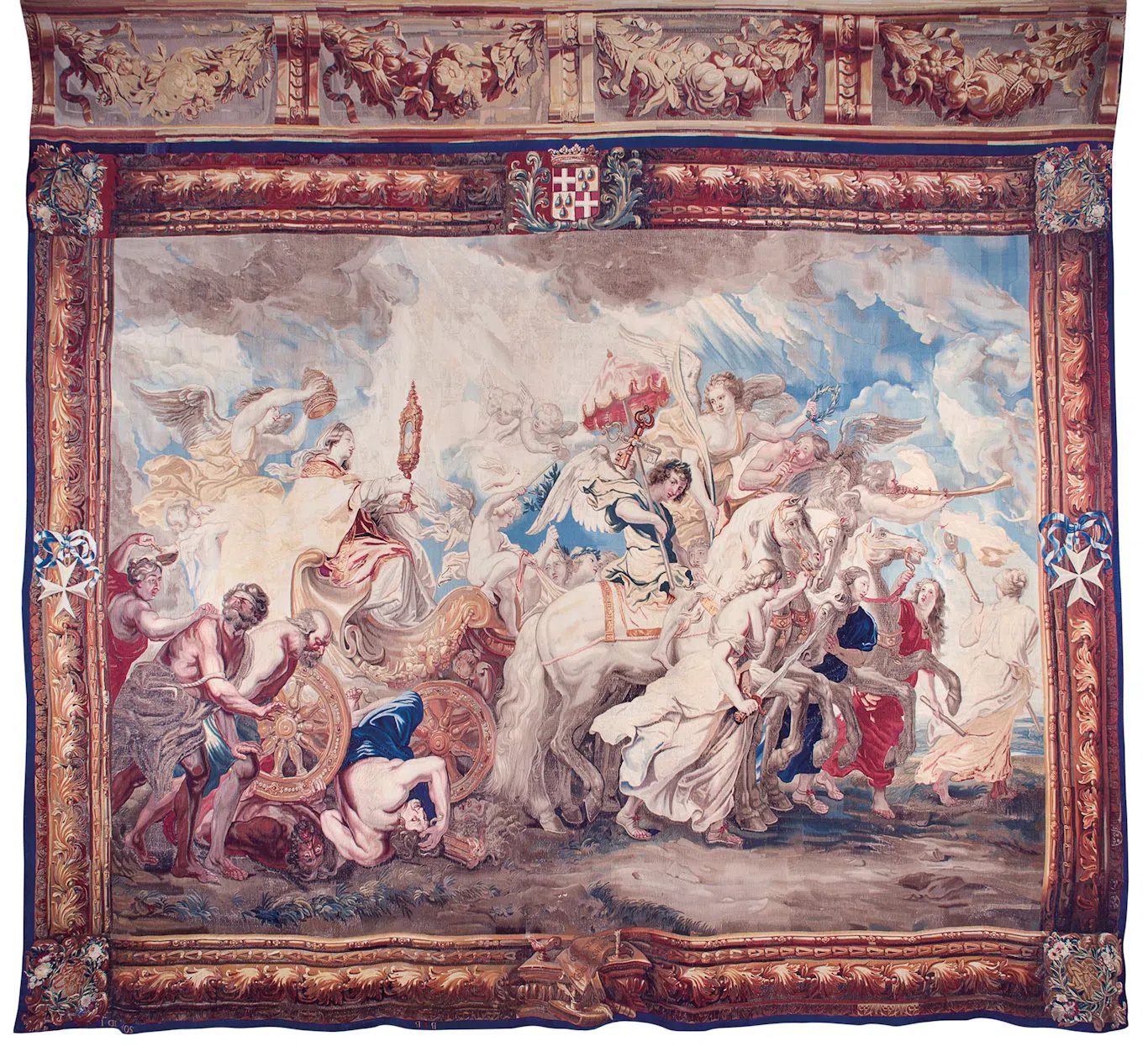
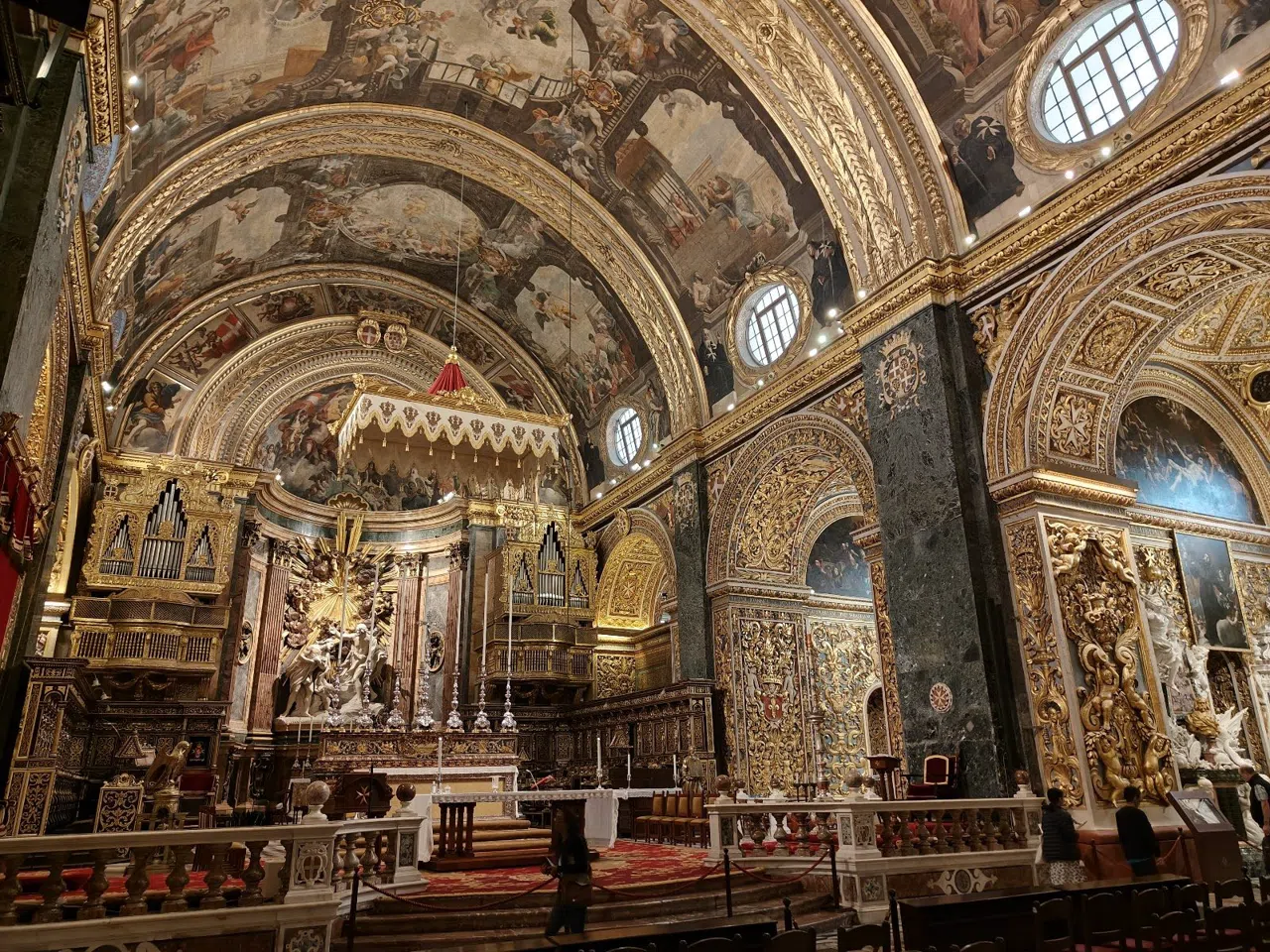
St John's Co-Cathedral (St John's Square, one block off Republic Street) is open Monday to Saturday and closed on Sundays and public holidays. That single fact wrecks more two-day plans than anything else in the city, so put it on Friday or Saturday and build the rest around it. Admission is about €15 and includes an audio guide, so a group self-paces and does not need a booking. The dress code is enforced at the door: shoulders and knees covered, and no stiletto heels, because you walk on the inlaid marble tombstones of the knights. Inside, past the gilt, the room that matters is the Oratory, which holds Caravaggio's Beheading of St John the Baptist, the only canvas he signed, and he signed it in the painted blood. Allow an hour, more if you listen to the whole guide.
Two minutes away on foot is the Grand Master's Palace (St George's Square), a Heritage Malta site that handles volume well and takes walk-ins or online tickets at roughly €10 to €15, cheaper inside the multi-site pass. Check on the day rather than promising anyone the throne room: the State Rooms close at no notice for state functions, while the Armoury below is reliably open and is the stronger half anyway. Two of you can do both buildings in a morning without hurrying; a group of eight should expect to lose twenty minutes simply reassembling between them.

Walking the length of Republic Street
From the palace, keep going. Republic Street runs out to Fort St Elmo and the National War Museum (the tip of the peninsula), roughly ten minutes from St George's Square, so it closes the walking loop rather than adding a journey. Admission is about €10 to €12. Two things to check before you set off: on In Guardia pageant days general admission only starts at 12:00, and the Harbour Fire Command and Gun Experience sections are temporarily closed. What remains is the WWII collection, and it is the one that makes the island's siege history land: the aircraft, the George Cross, the ordinary domestic objects from the shelter years. Allow ninety minutes. Groups are fine; the galleries absorb people.
From the fort you can walk back along the sea-facing bastions rather than retracing Republic Street, which takes about the same time and is considerably quieter.
Eating well when the rooms are small
Valletta's better restaurants are small rooms in old buildings, and on a weekend they are full. Book before you fly.
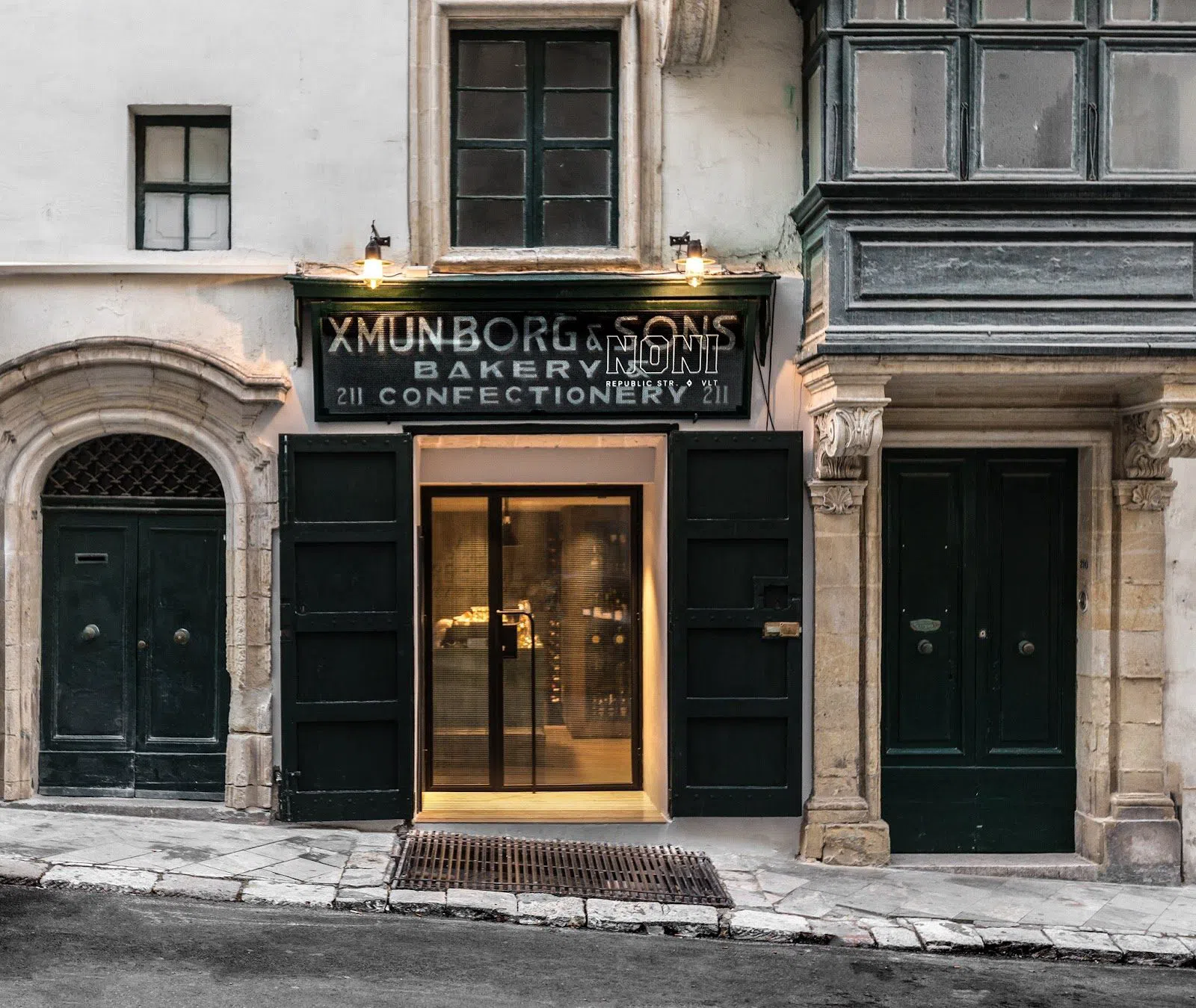
Rubino (Old Bakery Street) has been open since 1906 and is the local benchmark for Maltese-Italian home cooking, mains €24.50 to €36. It serves lunch and dinner Monday to Friday, dinner only on Saturday, and closes on Sunday. The room caps at around eight for a single party, so it suits couples and fours; a group of ten should not try. Noni (Republic Street) holds one Michelin star, retained in the 2026 selection, with tasting menus around €85 to €125 a head in a small vaulted room. Book roughly two weeks ahead for a weekend. Four to six is comfortable, larger parties need to phone rather than use the form. It is a five-minute walk from most Valletta hotels, so there is no taxi at either end of the evening.

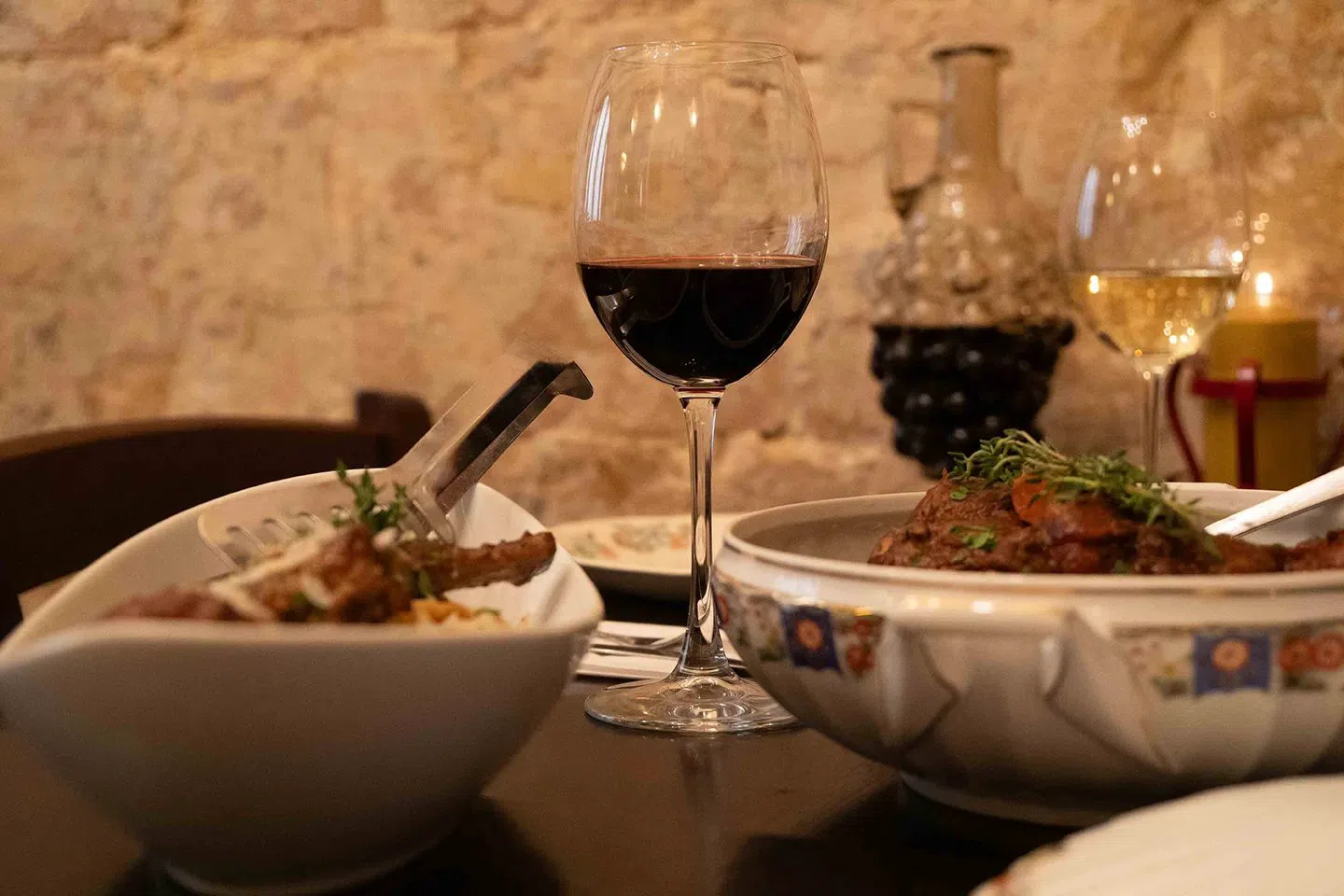
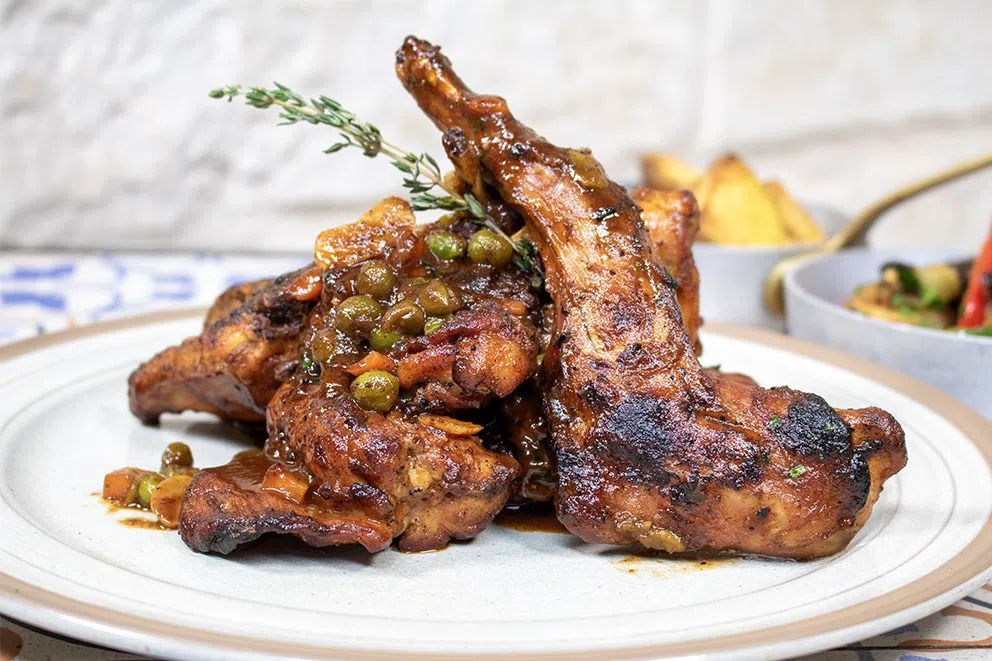
Legligin (Santa Lucia Street) removes the decision entirely: there is no à la carte, everyone eats the same set menu, five Maltese courses at lunch, seven at dinner, paired with local wine, around €30 to €40 a head. That suits a group, but the cellar is tiny and Saturday and Sunday are evenings only, so reserve. Ta' Nenu (St Dominic Street) is the one to know for groups and for weather. It takes larger tables, does private dining, and runs weekday ftira workshops where you top your own bread before it goes into the stone oven, €20 to €35 a head, and a rare useful option on a wet afternoon. It was formerly Nenu the Artisan Baker; use the current name when you book, and book, because the room is not large.
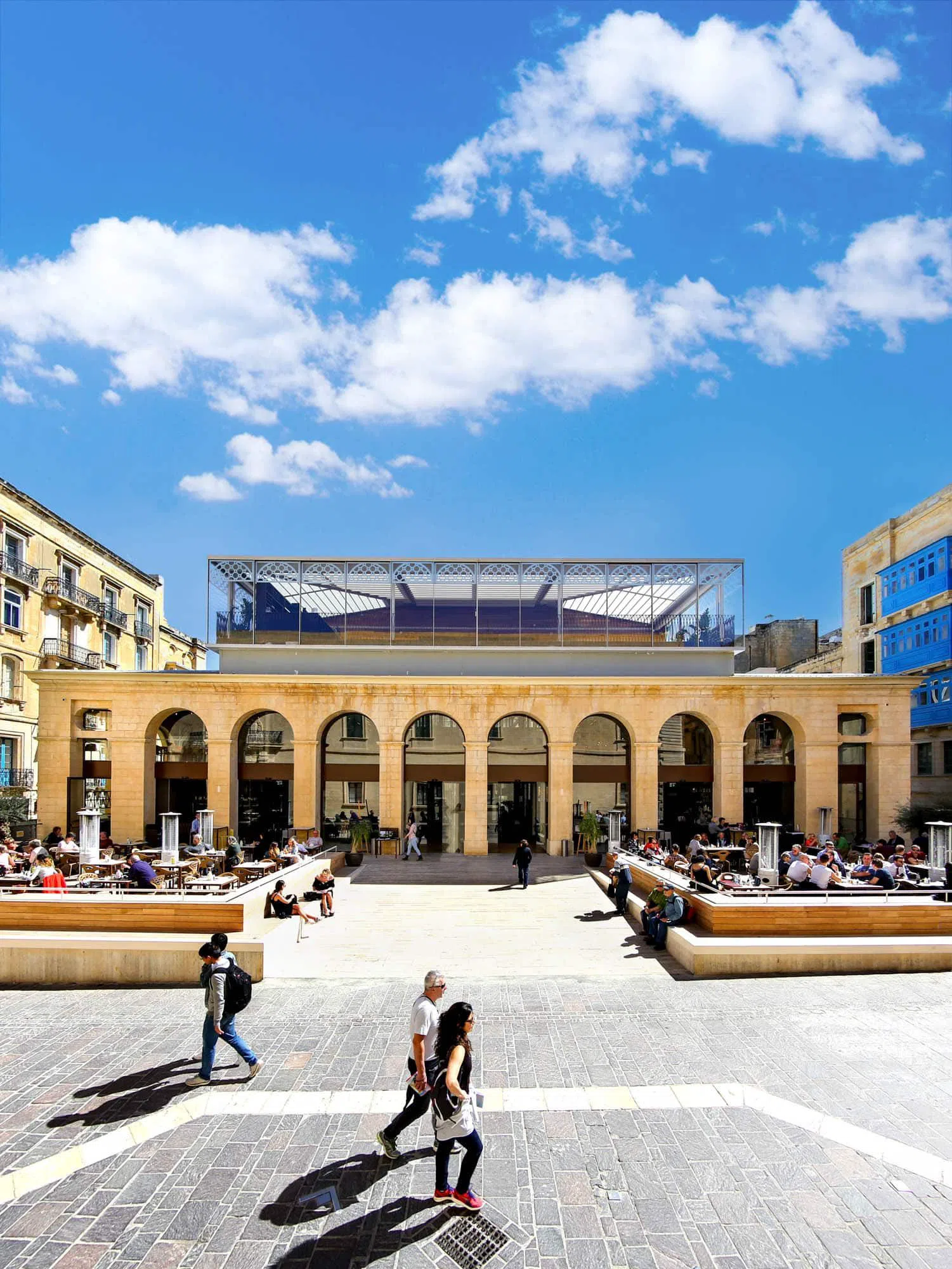
When all of that is full, which on a Saturday it will be, go to Is-Suq tal-Belt (Merchants Street), the restored market hall. Over fifteen counters, everyone orders separately, communal seating, €10 to €20 a head. The market level opens from 07:00 and the food court runs 11:00 to 22:00 daily, later on Fridays and Saturdays. It is the honest answer for a group that cannot agree and the reliable fallback at 20:30 with no reservation.
Evenings between Strait Street and the steps
Trabuxu Wine Bar (Strait Street) was the first of the cellar bars on that street and still keeps a serious Maltese and Italian list, €8 to €12 a glass, cheese and charcuterie boards €15 to €25. It opens Tuesday to Saturday evenings only, closes Monday and Tuesday, and admits no under-12s; the Monday closure catches short-break visitors constantly. Reserve for Friday and Saturday. It also takes private function bookings if you are a larger party.
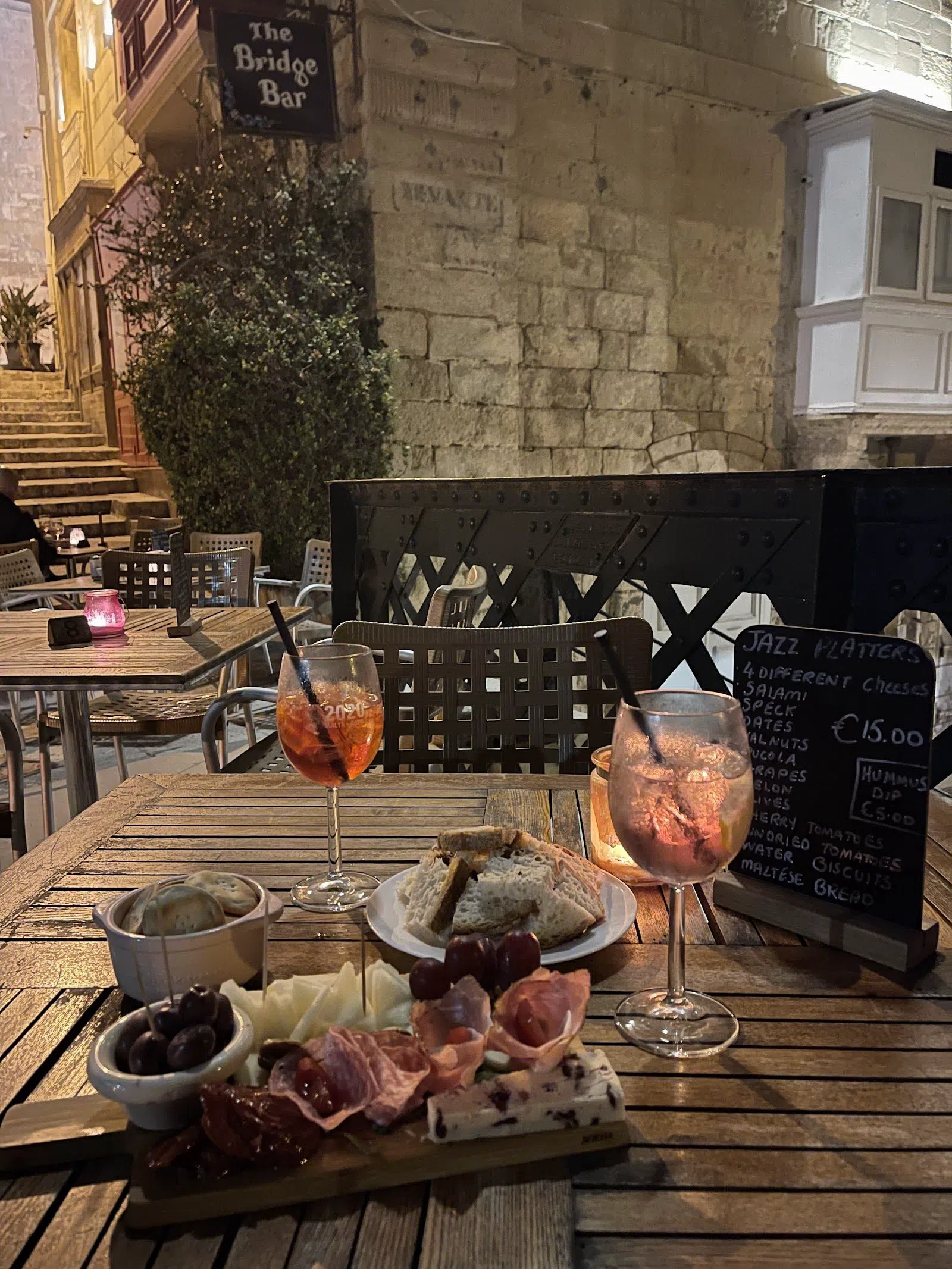
The Bridge Bar (St Ursula Street, lower Valletta) has no door policy worth the name, because the venue is essentially a flight of public steps beneath a bridge. Drinks are €4 to €8, it opens Tuesday to Saturday from 19:00 to midnight, and the Friday jazz sessions run from May to the end of November with the audience sitting on the steps with cushions. Arrive before the set starts if you want a spot with a view of the harbour rather than of the backs of heads. Groups simply spread up and down the stairs. It is two minutes from the ferry landing, which makes it the natural last stop before the night boat.
One bus, two day trips
Mdina (30 to 45 minutes from Valletta) needs no planning at all. Buses 51, 52 and 53 leave from bay C2 at the terminus roughly every ten minutes, and the walled town is free to enter and open at all hours. Go late in the afternoon: once the coach parties have left, the streets earn the name the Silent City, and the light on the limestone is worth the trip on its own. The cathedral and museums inside are small and metered, around €10 to €15, with Palazzo Falson about €10, so a large group should expect to queue or split up. Last buses back run into the evening, but check the return time on the tallinja app before you settle into dinner.

Marsaxlokk Sunday Market is the other, on buses 81 and 85 plus the Sunday TD10, €2.00 to €2.50 each way. Go between 07:00 and 09:00 and it is still the market the village itself uses, with the fish stalls in full operation. By mid-morning the fish thin out and the trinket stalls take over. It is free to browse and there is no ticket or group limit, but the quayside restaurants afterwards fill fast at Sunday lunch, so book ahead for a party of more than four.
One of those two, not both. A weekend that tries to do everything ends up spent at a bus stop.
A two-day shape that works
Friday afternoon: walk Republic Street end to end to get your bearings, Upper Barrakka before sunset, dinner booked. Saturday: St John's Co-Cathedral at opening, the palace after, lunch at the market, the lift down and a water taxi across at around 15:00, back on the ferry, jazz on the steps. Sunday: the early market run or a late-afternoon walled town, remembering that the cathedral is shut and the ferry runs a reduced Sunday service. More detail on individual sites sits in the Valletta guide.
Practical notes
Everything above is walkable, one bus ride, or one boat. Buses are €2.00 to €2.50 a single, valid two hours; the Explore card is €25 for seven days, worth it past roughly ten rides. The ferry is €2.50 single and €4.50 return, free with a personalised tallinja card. Water taxis are €2 to €3 one way, about €8 for a harbour loop, more after dark. The Barrakka Lift is about €1 up and free down.
Cards work almost everywhere, but carry €20 to €30 in coins and small notes for the water taxis, the Saluting Battery terrace, market stalls and the bus if you are paying onboard.
The two fixed constraints are Sunday closures, with St John's Co-Cathedral shut, Rubino shut and a reduced ferry timetable, and the small dining rooms, which need booking a week or two out. Check whether an In Guardia pageant falls on your day at Fort St Elmo, and whether the palace State Rooms are open, on the morning itself.
Two people can do a full weekend on roughly €60 to €70 a head a day excluding accommodation: three major sites at €10 to €15 each, market or ftira lunches at €10 to €20, one serious dinner at €30 to €40, drinks at €4 to €12, and under €15 of transport across two days. Adding the tasting menu at the starred room roughly doubles one of those days on its own.
Before you go
Do I need to hire a car for a weekend based in Valletta?
No. The peninsula is roughly a kilometre long, half of it pedestrianised, and the parking that remains is largely resident-permit. Every bus route on the island leaves from the terminus outside City Gate, five minutes from most hotels, and the ferry piers are a lift ride away. A car costs you money and gives you a parking problem you would not otherwise have.
What gets ruined if I visit on a Sunday?
St John's Co-Cathedral is closed on Sundays and public holidays, which wrecks more two-day plans than anything else, so put it on Friday or Saturday. Rubino also closes on Sunday, Trabuxu is shut Monday and Tuesday, and the ferry runs a reduced Sunday timetable. Marsaxlokk's market, on the other hand, only happens on Sunday.
Is the seven-day Explore bus card worth it for two days?
Usually not. It costs €25 and only breaks even after roughly ten rides. Singles are €2.00 in winter and €2.50 in summer, valid for two hours with transfers, so most out-and-back trips cost one fare. Add two day trips plus airport journeys and it starts to pay.
How do the water taxis work if there are only two of us?
There is no timetable. The boatmen at Lascaris Wharf leave when about four passengers are aboard, so a couple may wait ten or fifteen minutes for others to arrive. It is around €2 to €3 each one way and five minutes across. Use it in daylight, and take the scheduled ferry, which runs every 30 minutes, if nobody turns up or you are coming back after dark.
Where can a group of eight eat without booking weeks ahead?
Is-Suq tal-Belt on Merchants Street has over fifteen counters and communal seating, so everyone orders separately. It is €10 to €20 a head, open daily and late on Fridays and Saturdays. Ta' Nenu also takes larger tables and does private dining, but still needs a reservation. Rubino caps at around eight, and Noni's vaulted room needs a phone call for anything larger than six.