The Valletta issue
Solo in Valletta Without a Car
A carless week in Valletta runs on a €2 bus fare, a €3 boat and a €1 lift. Here is how they fit together when you are travelling alone.

By Robin de VriesSlow days across Valletta's streets

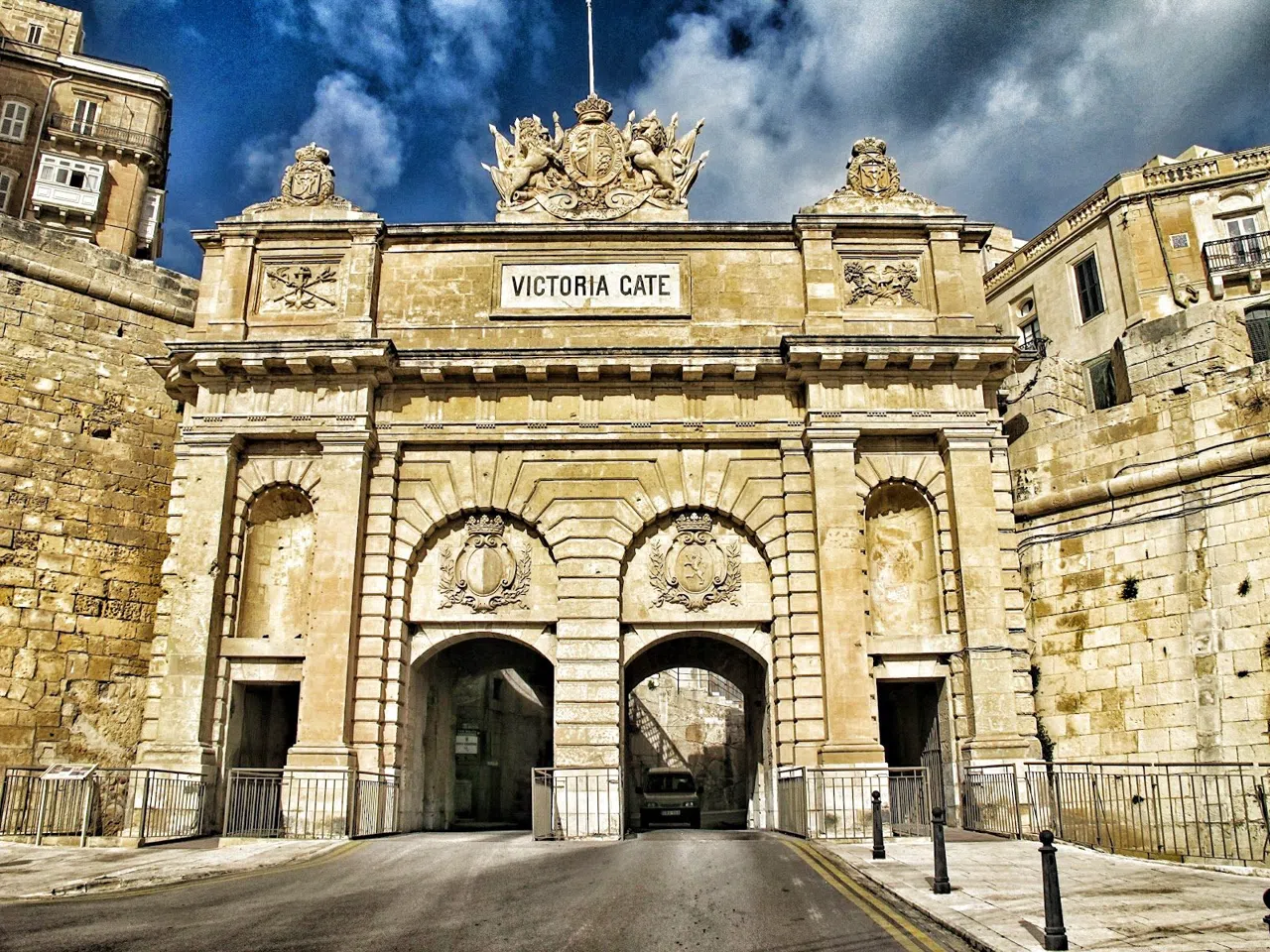
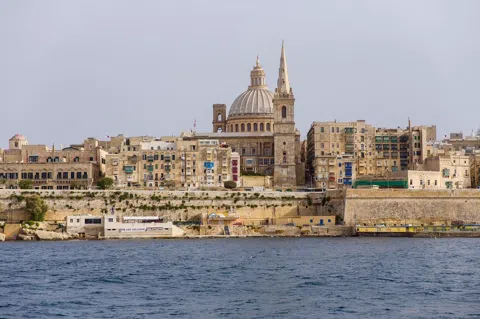
Valletta is about a kilometre long and 600 metres across, a grid laid over a peninsula with water down both sides and a ridge up the middle. From the bus terminus outside City Gate you can walk to the far end of the city in roughly twenty minutes, and the only real climbs are the cross streets that drop to the two harbours and then have to be walked back up. A hire car would spend the whole trip parked outside the walls, because the streets inside them are steps and bollards; everything that follows runs on a bus fare, a boat and a one-euro lift.
Everything starts at the terminus
Malta Public Transport (Valletta terminus, immediately outside City Gate) is the hub for both islands. Every route radiates from this one point, which is the practical argument for basing yourself in Valletta rather than anywhere else on the island when you have no car. A single fare is €2 in winter and €2.50 in summer, and it stays valid for two hours including transfers, so a short hop out and back inside that window costs one ticket rather than two. Night and Direct routes are €3. The Explore Card gives seven days of unlimited travel for €25 adult, €7 child.

Do the arithmetic before you buy the card. At summer prices it breaks even at ten single journeys in a week; at winter prices, around thirteen. A three-day visit with two bus day trips will not come close, so buy singles as you go; a full week of moving around most days will pay it back. The free-travel Tallinja scheme covers residents only, so as a visitor you pay, whatever you have read elsewhere.
Capacity catches people out more often than frequency does. Buses fill at peak hours and drivers can and do refuse standing loads. Travelling alone this barely affects you, since a single seat appears on almost every service, but it is why a group of ten trying to move together at 09:00 or 17:00 ends up split across two buses and half an hour apart. If you are meeting people, agree the destination, not the bus.
Plan your Valletta trip
Live prices from our booking partners.
Free cancellation on many rooms. We may earn a commission when you book.
The lift and the two ferries do the hills for you
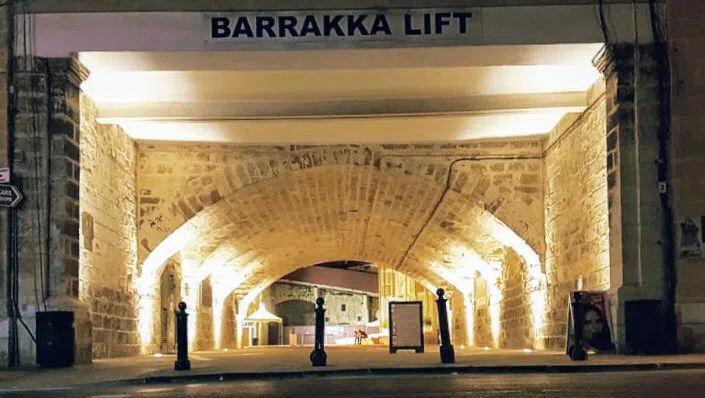
The Barrakka Lift (between Lascaris Wharf and the upper city) removes the hardest bit of walking in Valletta: the climb from the waterfront up to the level of the gardens. It costs €1 per person and the ticket is valid up and down on the same day. There is no booking, two cars carry roughly twenty people each, and even a coach group is absorbed in a couple of cycles. The ride takes well under a minute and gives you a moving view along the length of the Grand Harbour, which is fair value for a euro.

Valletta Ferry Services (quays on both harbours, below the city walls) run two routes: across Marsamxett to Sliema, and across the Grand Harbour to Cospicua. Both are walk-on with no reservations, they go every 30 minutes, and a crossing that takes ten minutes replaces a bus ride of about forty. A day single is €3 and a return €5; on the night service it is €3.50 and €5.20. It is free if you hold a personalised Tallinja card, which in practice means residents. Buy the Three Cities ticket and the Barrakka Lift back up is included, so you land, walk, and ride back up to the upper city without the staircase.
Together the ferry and the lift turn the harbour into a short loop rather than an expedition, and both work perfectly well for one person turning up five minutes before a sailing.
Three interiors worth paying to go inside

St John's Co-Cathedral (city centre, a minute off Republic Street) sells timed tickets at €15 adult, €12 senior or student, under-12s free, with the belfry tour €5 on top. The audio guide is included, which is why it suits solo visitors: you move at your own pace and never wait for a group to reassemble. Allow about 1h45. Caravaggio's Beheading of St John hangs in the oratory and would justify the ticket on its own. Two current practicalities: the museum wing is closed for refurbishment while the cathedral and oratory stay open, and stiletto heels are refused at the door, because the floor is a carpet of inlaid marble tombstones.
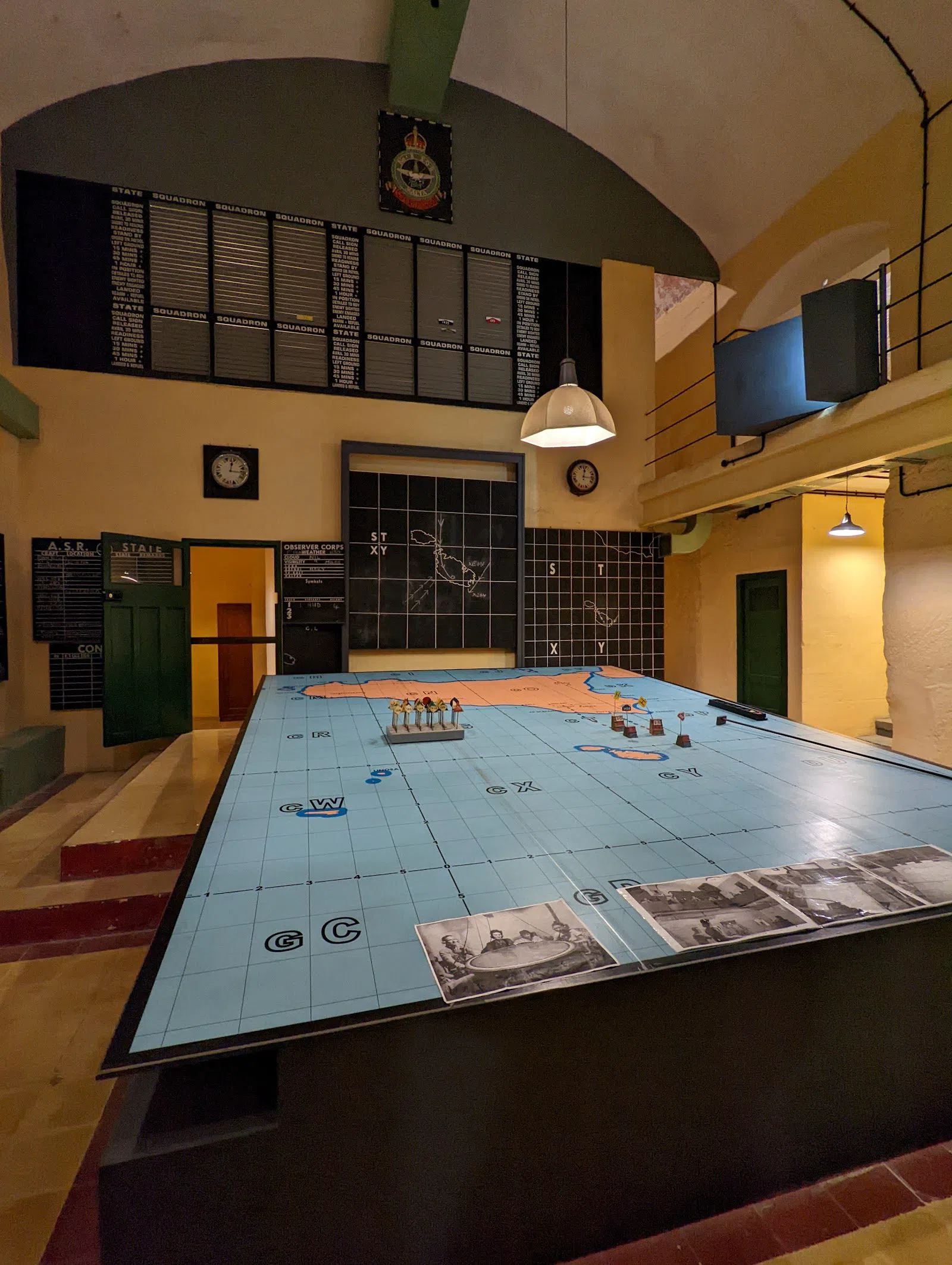
Lascaris War Rooms (cut into the rock beneath the Saluting Battery) is €20 adult, €19 senior, €7 child, with a guided War H.Q. tunnel tour at €17 for adults. The venue is cashless. Book the guided tour ahead, because the groups are deliberately small and they do fill. The tunnels sit at a steady cool temperature whatever is happening above ground, which makes this the dependable hour on an afternoon that is either 34°C or sideways rain. It is closed on Sundays, so put it in a weekday slot and do not leave it as your rainy-day fallback for the wrong day.
Casa Rocca Piccola (Republic Street, upper city) runs hourly 45-minute live guided tours in English for around €15. Numbers are capped small, so groups should pre-book rather than turn up; one person can usually join the next tour on the hour. It is still the de Piro family home, and it reads like a house rather than a display case. The shelters cut into the rock underneath are part of the same tour. As a solo traveller this is the easiest sociable 45 minutes in the city: eight or ten people, a guide who answers questions, and it is over before it becomes an obligation.

Where to sit still and watch the harbour
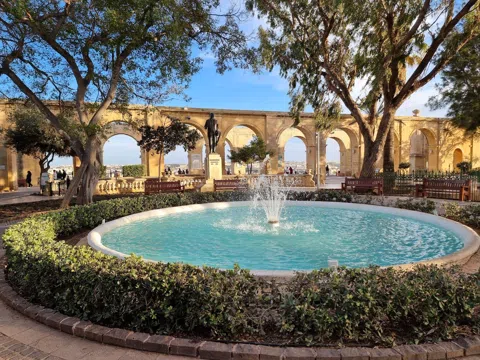
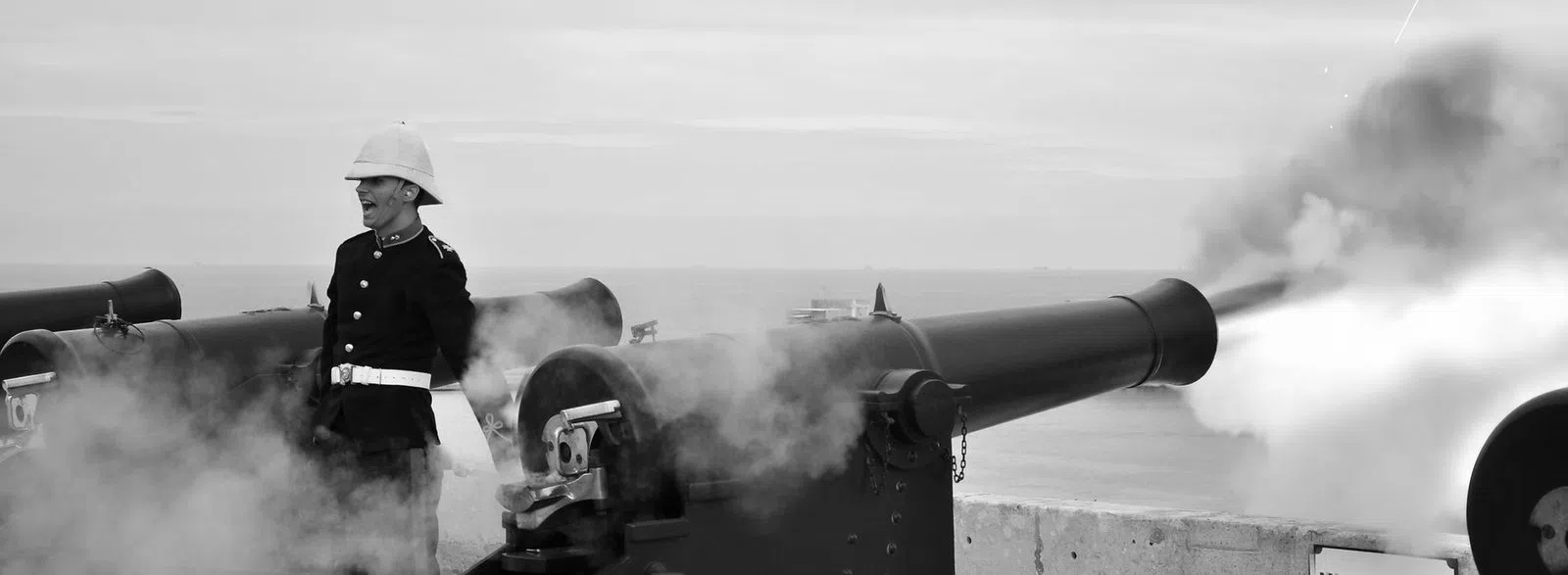
Upper Barrakka Gardens & the Saluting Battery (upper city, directly above the lift) is free to walk into and always will be. The battery platform below is ticketed at €3 adult, €1 child, card payment only on site. The gun fires at noon and again at 16:00, Monday to Saturday. You can watch from the garden railing above for nothing, and plenty of people do; the ticket puts you down on the platform with the guide, and it is the cheapest guided thing in Valletta. It gets crowded before the noon firing, so arrive about fifteen minutes early, or twenty if you want the railing rather than the third row behind it.
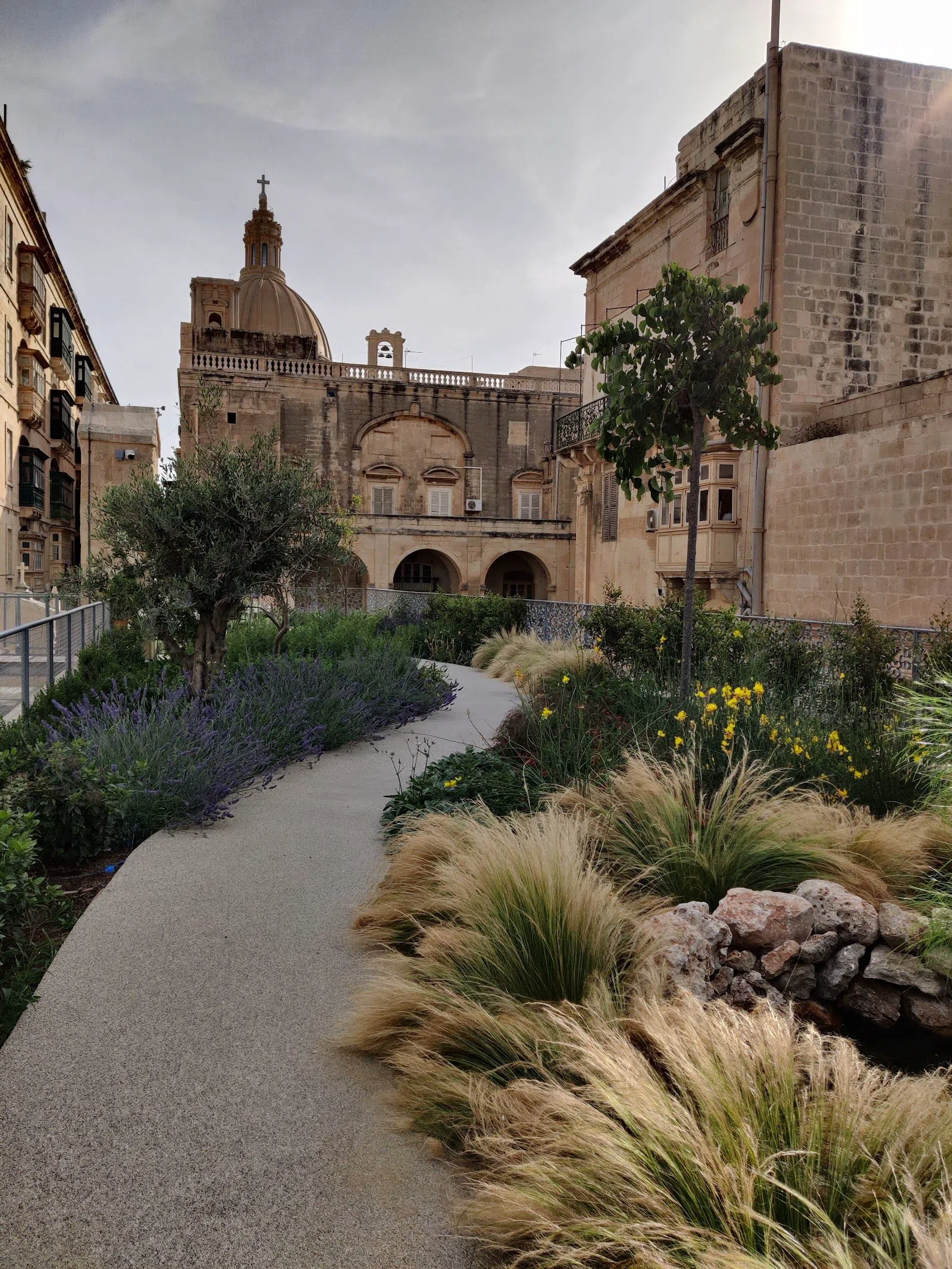
Valletta Design Cluster (Il-Biċċerija l-Antika, lower Valletta) is free, open to anyone during opening hours, and has the only public roof garden in the city. Both a lift and stairs reach the roof. It sits in a part of the lower city most visitors never walk down into, and small informal groups are fine as long as you treat it as a quiet community workspace rather than an event space. Check the hours before you make the walk down: it closes Sundays, the times shift with the season, and the return leg is uphill.
Eating alone in a city that is set up for it
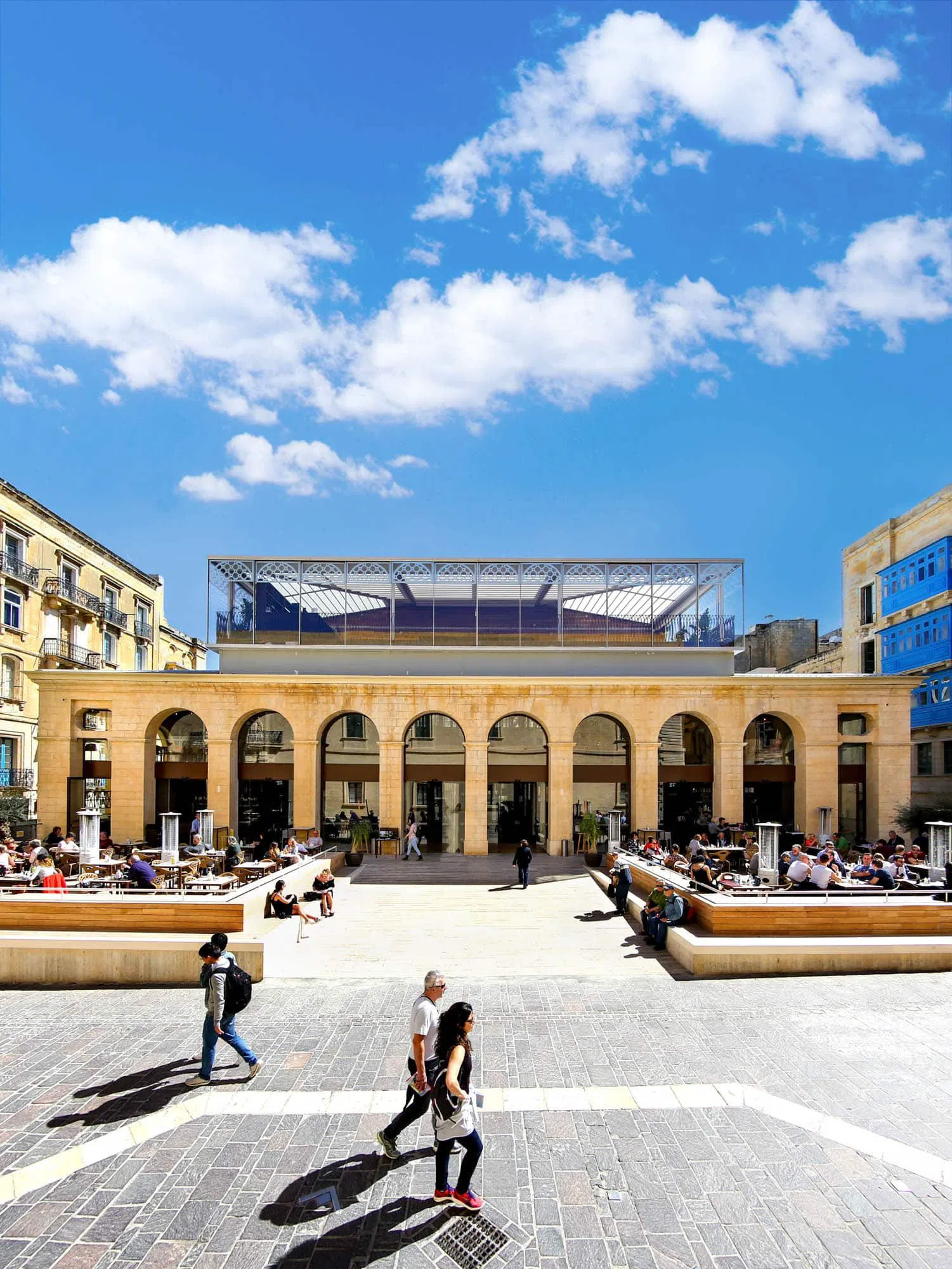
Is-Suq tal-Belt (Merchants Street, city centre) is the least awkward place in Valletta to eat by yourself. Fourteen stalls under one roof (Maltese street food, Vietnamese, Turkish, Filipino, Indian) around communal tables, no bookings, open 11:00 to 22:00 daily. Plates run about €8 to €15 and every stall bills separately, which is also why it absorbs groups without the end-of-meal arithmetic. Nobody registers a single diner at a shared table here.
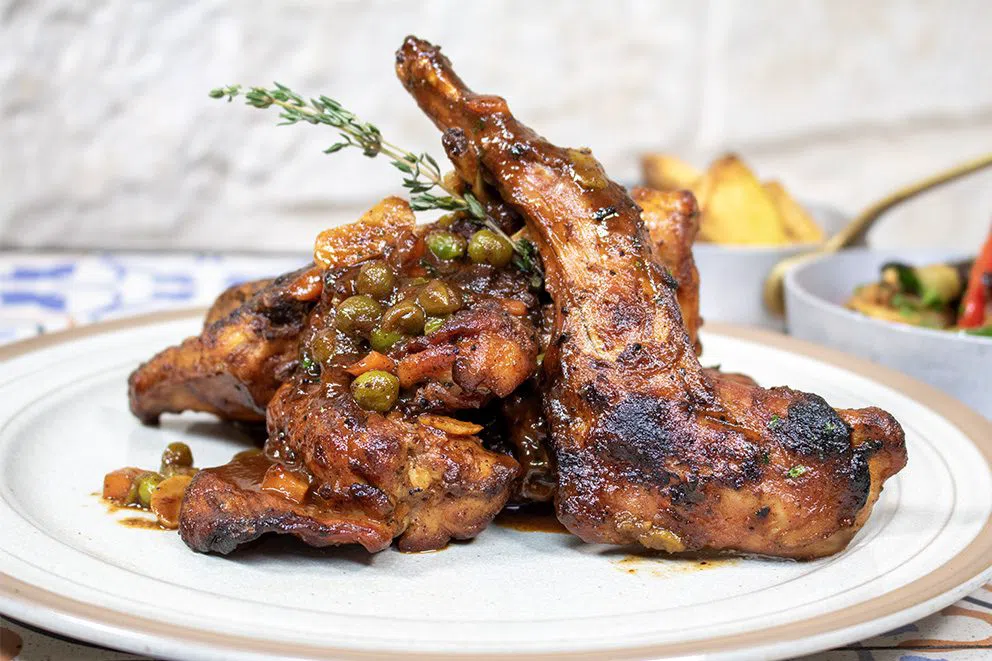
Ta' Nenu (lower Valletta, rebranded from Nenu the Artisan Baker) still turns out the same stone-oven ftira, with dishes at €12 to €22.50. It fills fast in the evenings and takes groups, so book ahead rather than walking in at 20:00. Order one ftira plus a bowl of the fish soup and you have eaten the local repertoire properly for roughly what a tourist-menu starter costs on the main drag.
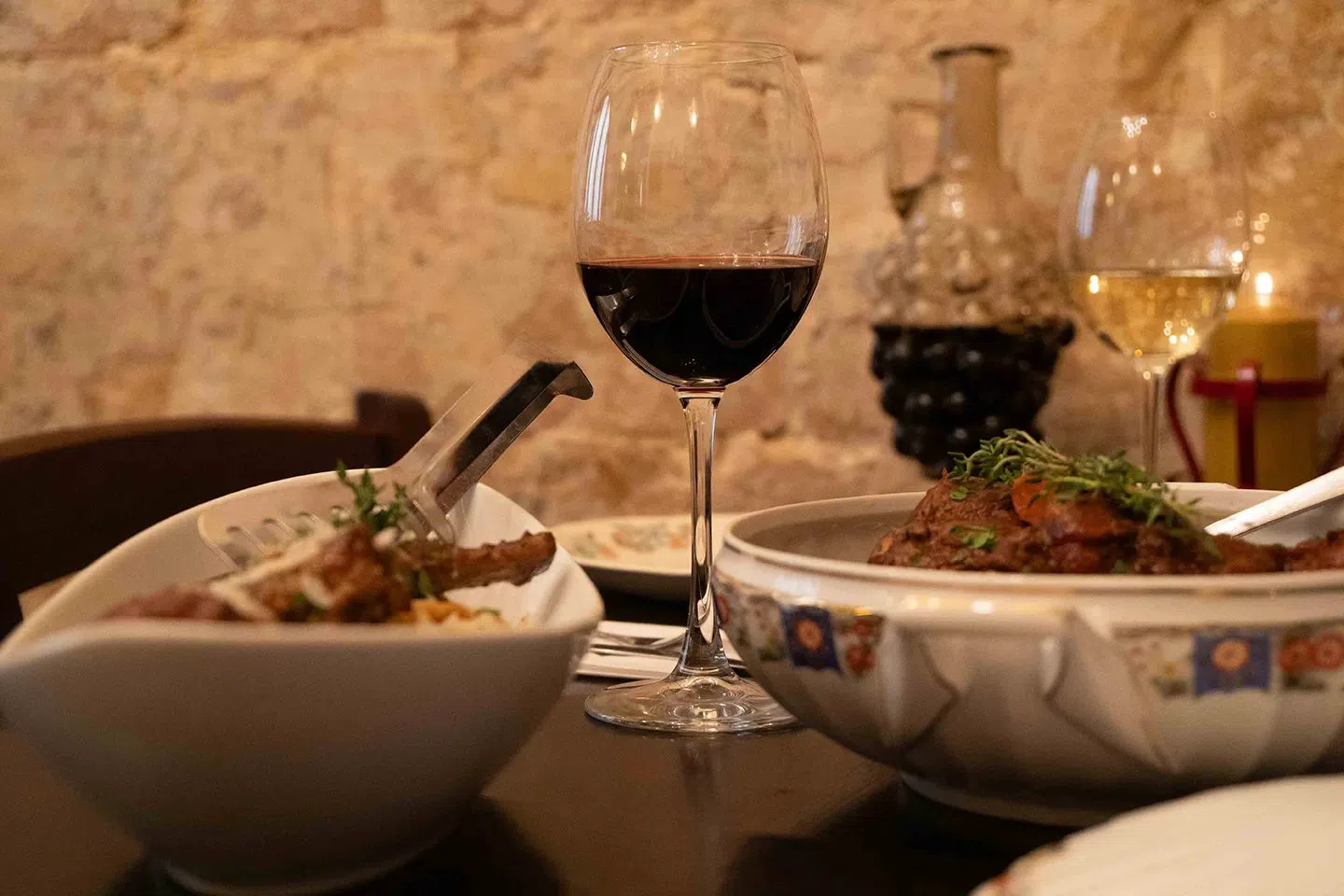
Legligin (a very small room in the lower city) serves a blind Maltese tasting menu, five courses at lunch and seven at dinner, with nothing to choose from, at roughly €40 to €55 a head with wine. It is listed in the Michelin Guide. The room is tiny and suits couples and pairs best, so a solo seat means booking and taking an early sitting, and a larger group needs to book well in advance or not at all. With nothing to order, the most tedious part of a solo dinner does not happen.
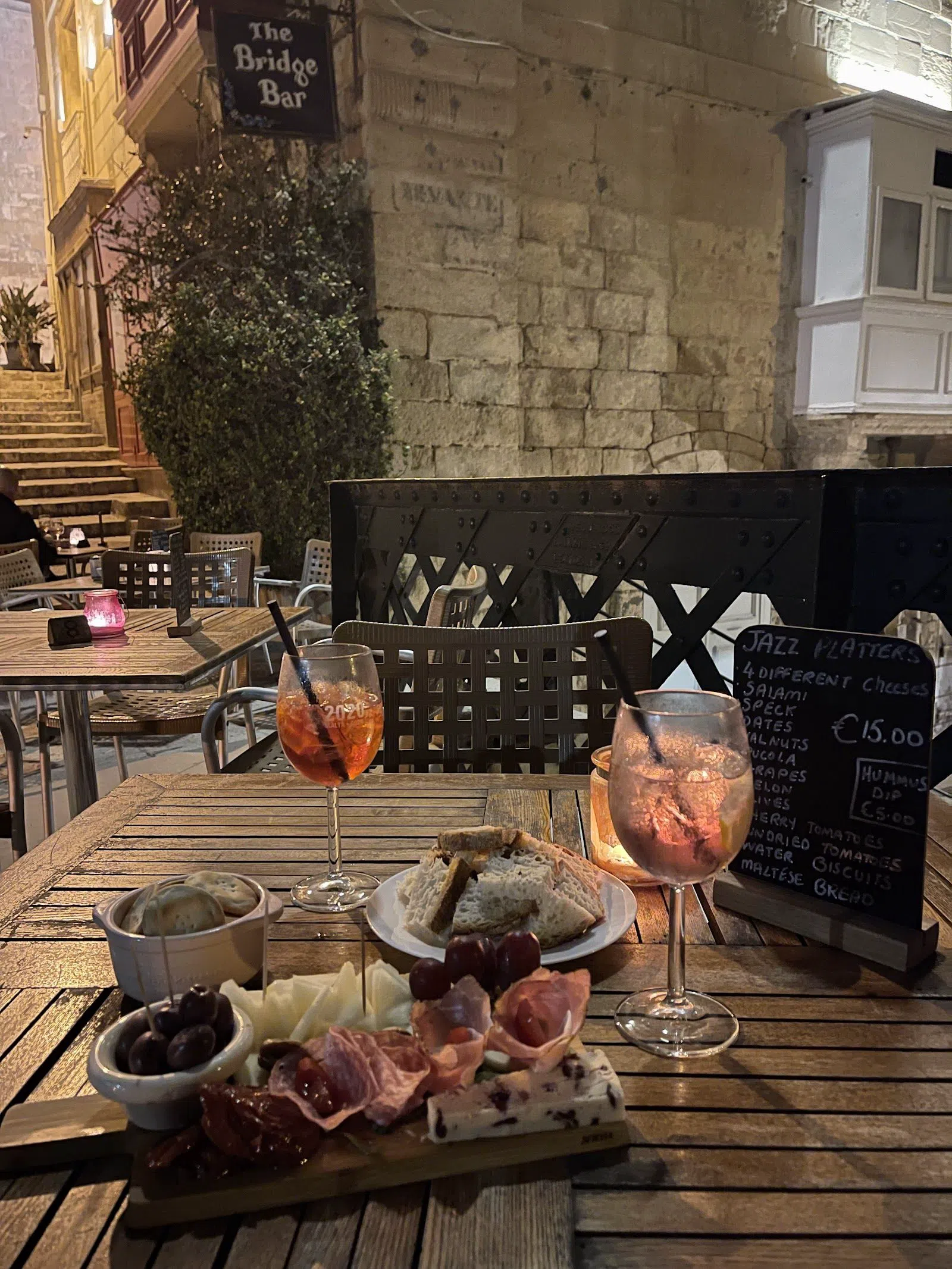
The Bridge Bar (on the steps above the Grand Harbour, lower Valletta) has no table service and no door policy. You order at the bar, take the drink outside, and sit on the staircase; drinks are €4 to €8, with cheese and charcuterie platters extra. Live jazz runs every Friday from spring through late autumn, starting around 21:00, and by 20:00 the good steps are gone, so that is the one night groups should not expect to sit together. Any other evening it is a quiet drink on a staircase over the water, and one of the few places in the city where sitting alone is simply the normal way to be there.
Half-days the bus and the boat already cover
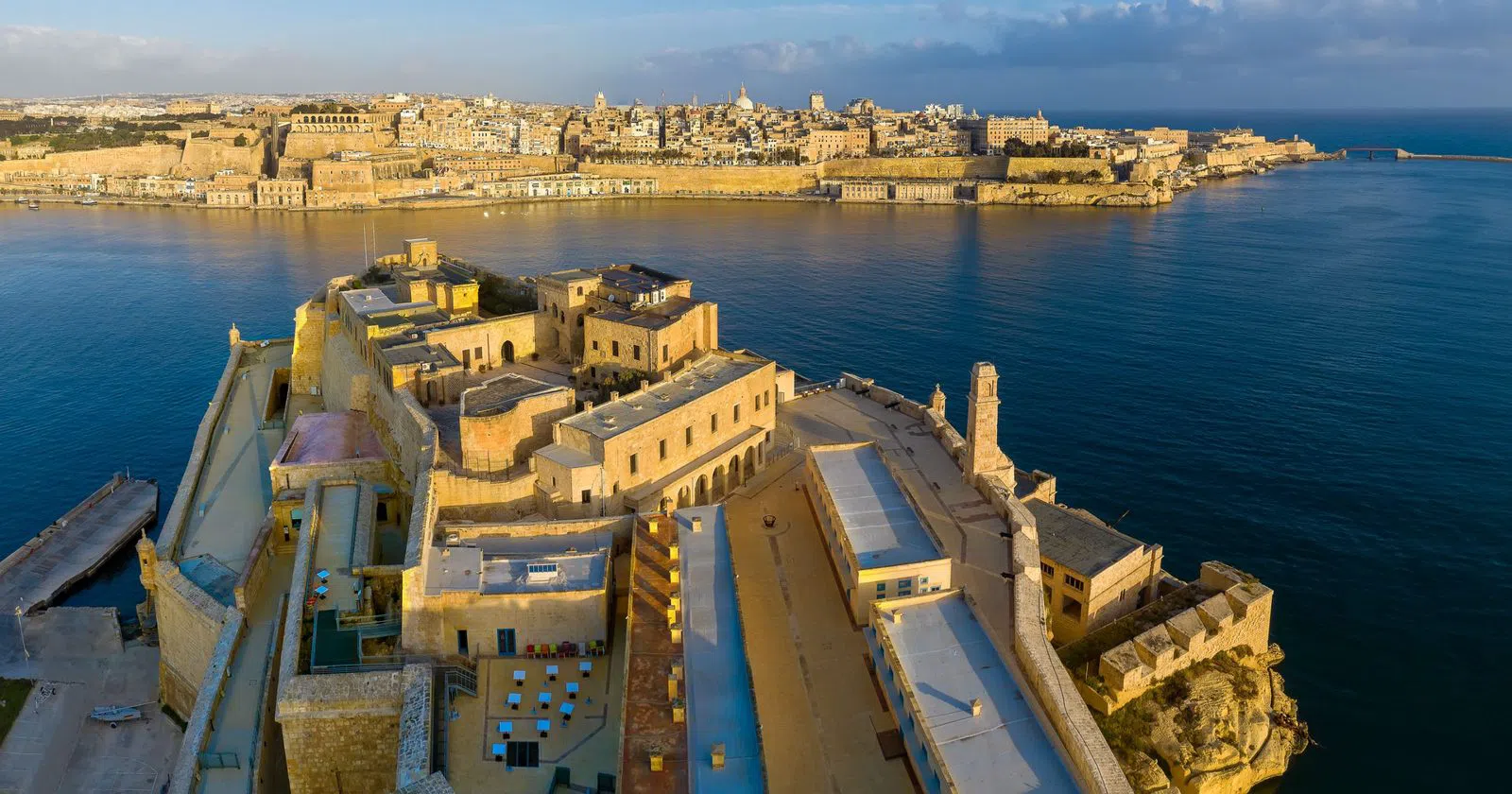
Fort St Angelo, Birgu is the best half-day out of Valletta that needs no bus at all. Take the Cospicua ferry, ten minutes, then walk round the waterfront. It is a Heritage Malta site at €10 adult, €6 youth, senior or student, €4 child, and groups are admitted without booking. The ramps are steep, the ground is open and there is very little shade, so go early or late in the day and carry water. The view back at Valletta from the ramparts is the one people remember.
Marsaxlokk Market is route 81 from the terminus, daily, roughly 30 to 35 minutes each way at €2 to €2.50 a single. The market is Sunday 09:00 to 16:00, but the fish is gone by midday, so an early start buys you a working village and a late one buys you coach parties. Browsing is free; a fish lunch on the quay runs about €25 to €40. The waterfront restaurants take groups, but Sunday lunch needs booking, and as one person at 12:30 you will generally be found a table where a party of six will not.
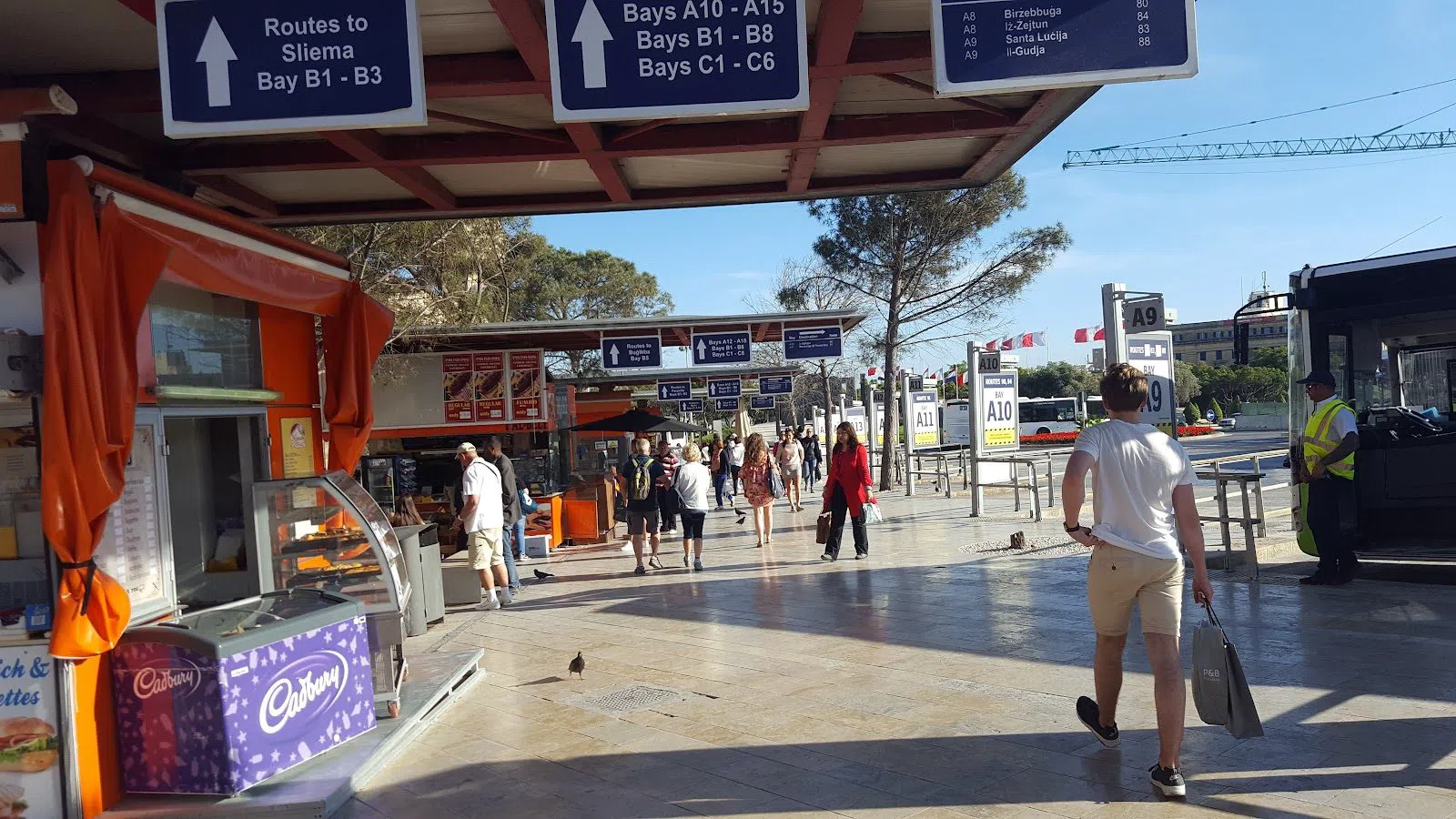
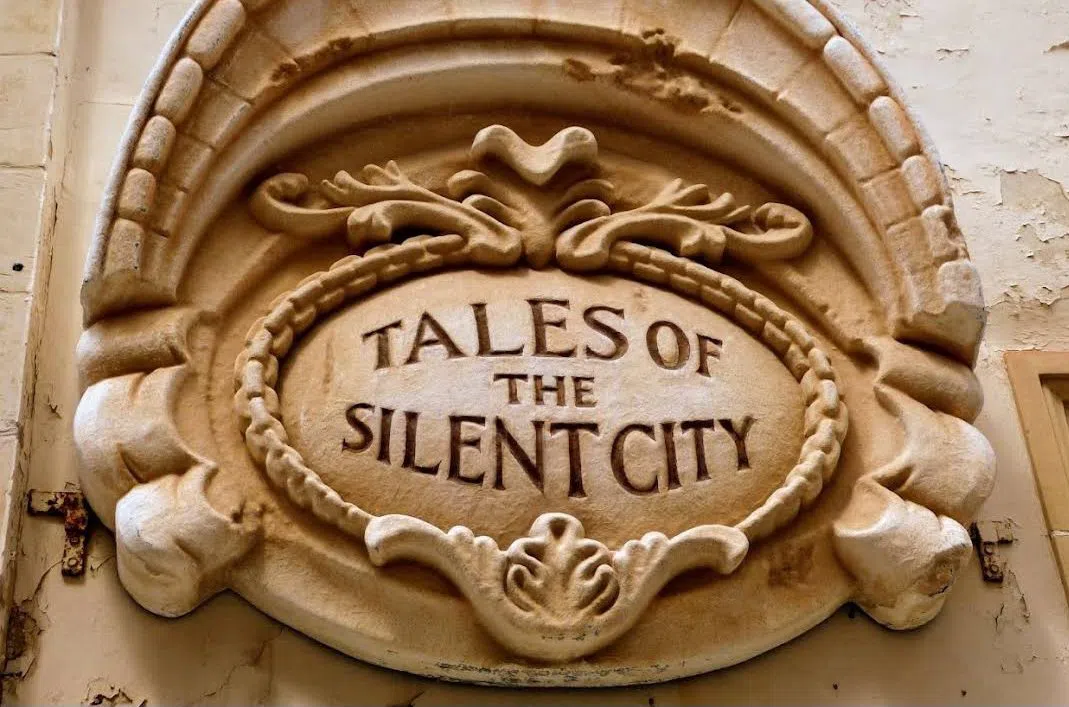
Mdina, the Silent City is buses 51, 52 and 53 from stand C2, leaving roughly every ten minutes and taking about half an hour to Rabat, then a five-minute walk over the bridge. There is no admission and cars are banned inside the walls, so everyone walks; the lanes are narrow and get genuinely tight around midday. Go late afternoon, when the day-trippers have left and the name starts to make sense. One fare note: you will be there longer than two hours, so the transfer window will have expired and the return is a second single.
Gozo Highspeed takes foot passengers only, from about €7.50 one way per adult, and sails from Valletta itself rather than the far end of the island, which removes the bus-to-Ċirkewwa penalty at both ends of the day. Book online in high season; sailings do sell out. Treat it as a full day rather than a half, and check the last return before you commit to a long lunch.

Where to sleep and what to read next
Staying inside the walls is what makes the rest of this work: the terminus, both ferry quays and the lift are all within a fifteen-minute walk of any bed in the city, which means you never need a taxi to start or end a day. Rooms in the old townhouses tend to have stairs and no lift, so ask before you book if that matters. Compare what is available through Valletta hotel search, and use the wider Valletta guide for the parts of the city this piece does not cover.
The practical end of it
Buy bus singles as you board and keep the ticket for the two-hour transfer window; only buy the €25 Explore Card if you will genuinely make ten or more journeys. Ferries are walk-on every 30 minutes, €3 single or €5 return, and the Three Cities ticket includes the €1 lift back up the hill. Nothing in this article requires a car, a taxi or a booked transfer.
The Saluting Battery takes cards only on site and Lascaris War Rooms is fully cashless, so you do not need to hold cash for those. Carry some small notes anyway for bus singles and market stalls at Marsaxlokk, and remember that every stall at Is-Suq tal-Belt bills separately.
The gun fires at noon and 16:00 Monday to Saturday, not Sunday. Lascaris War Rooms and the Valletta Design Cluster both close on Sundays, which is the day to spend at Marsaxlokk instead. Pre-book Casa Rocca Piccola, the Lascaris guided tunnel tour, Legligin, and a table at Ta' Nenu for any evening. Leave 1h45 for St John's Co-Cathedral and do not schedule it against a ferry.
A moderate day alone comes out around €35 to €45: one paid interior, a market lunch, a ferry return, the lift and a drink on the steps. A heavier day with St John's, Lascaris and a sit-down dinner at Ta' Nenu lands nearer €70. A tasting menu at Legligin is a €40 to €55 evening on its own. On any of them, the transport line is under €10.
Before you go
Do I need to hire a car if I'm staying in Valletta?
No. Every bus route on both islands radiates from the Valletta terminus outside City Gate, the two harbour ferries leave from below the city walls, and the Barrakka Lift handles the only steep climb. You cannot usefully drive or park inside the walls anyway, so a car would sit in a garage outside them for the length of your trip.
Is the €25 Explore Card worth it for one person?
Only if you will make about ten or more single journeys in the week. Singles are €2 in winter and €2.50 in summer and stay valid for two hours including transfers, so short out-and-back trips often cost one fare. A three-day visit with two bus day trips is cheaper on singles; a full week of daily movement is not.
How do I get to Gozo without a car?
Take Gozo Highspeed, which carries foot passengers only and sails from Valletta itself, from about €7.50 one way per adult. Because it leaves from the city rather than the far end of the island, there is no long bus leg at either end of the day. Book online in high season, as sailings sell out, and check the last return before committing to a long lunch.
Where can I eat alone in Valletta without it feeling awkward?
Is-Suq tal-Belt on Merchants Street has fourteen stalls, communal tables, no bookings and plates at €8 to €15, open 11:00 to 22:00 daily. Legligin serves a blind tasting menu with nothing to order, roughly €40 to €55 a head with wine, though its room is small so book early. The Bridge Bar has no table service at all: you order at the bar and sit on the steps.
What is open on a Sunday in Valletta?
Lascaris War Rooms and the Valletta Design Cluster are both closed on Sundays, and the Saluting Battery gun fires Monday to Saturday only. Sunday is the day for Marsaxlokk, whose market runs 09:00 to 16:00 on route 81, about 30 to 35 minutes from the terminus. Go early, because the fish is gone by midday.